
How Much Does a 5kW Solar System Cost in the Philippines?
Kung ang monthly electric bill mo ay nasa around ₱10,000, one of the most recommended system sizes for homeowners is a 5kW solar system Philippines setup. This size is popular for medium-sized homes, families with multiple appliances, work-from-home setups, and households using aircon during the day.
A 5kW solar system is often considered the “sweet spot” for many Filipino homes because it gives stronger solar production than a 3kW system while still being more affordable than larger 8kW or 10kW systems. It can help reduce monthly electricity bills, improve long-term savings, and support a more energy-efficient home.
In this guide, we’ll explain the estimated cost, expected output, monthly savings, roof space requirement, best setup type, and whether a 5kW solar system Philippines package is enough for a ₱10,000 Meralco bill solar target.
How Much Is a 5kW Solar System in the Philippines?
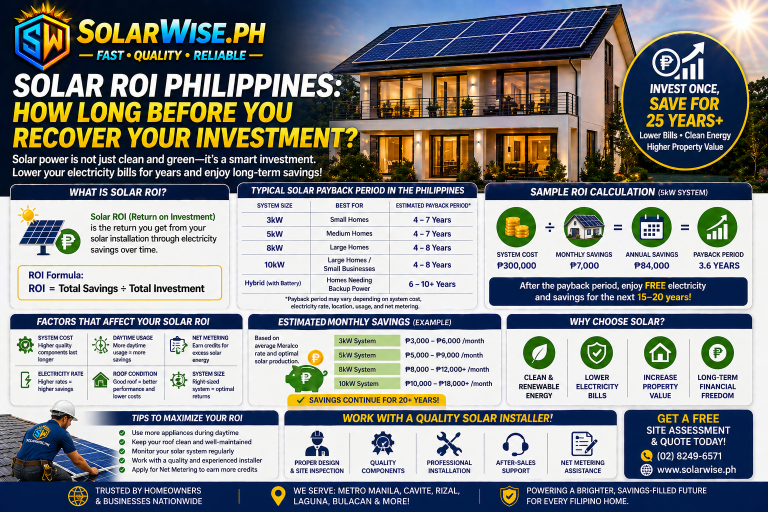
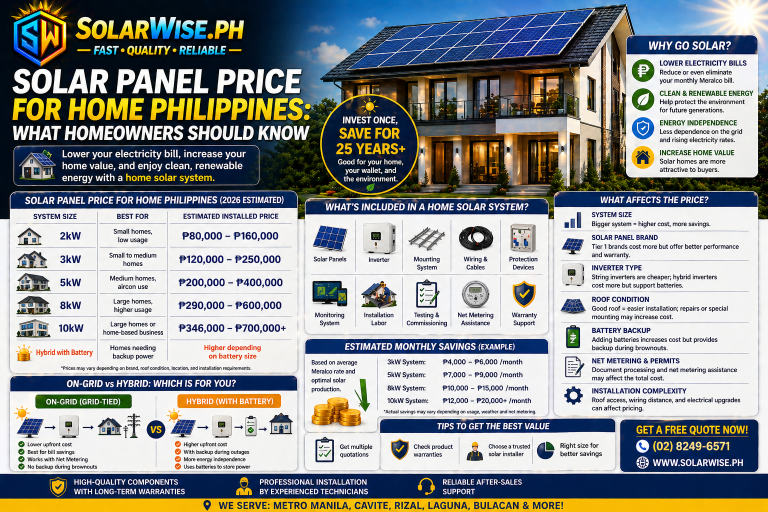
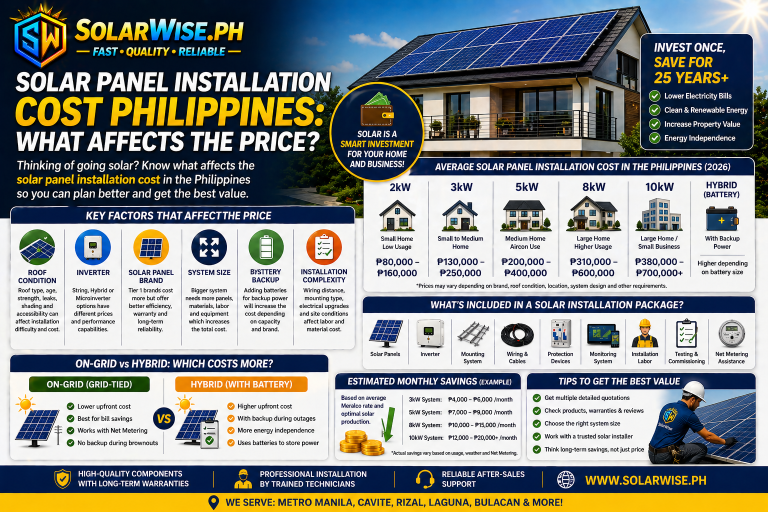
In 2026, a complete 5kW solar system Philippines installation commonly costs around ₱200,000 to ₱400,000, depending on equipment brand, inverter type, roof condition, location, and package inclusions. One 2026 solar pricing guide estimates a 5kWp system at around ₱192,500 to ₱300,000, while another guide places a typical 5kW residential system in Metro Manila at around ₱275,000 to ₱375,000 fully installed.
Here is a practical cost guide:
| 5kW Solar Setup Type | Estimated Cost Range | Best For |
|---|---|---|
| 5kW Grid-Tied Solar | ₱200,000 – ₱400,000 | Bill savings, residential solar, faster ROI |
| 5kW Hybrid Solar | ₱375,000 – ₱750,000+ | Homes needing backup power |
| 5kW Off-Grid Solar | ₱320,000 – ₱450,000+ | Remote properties without grid access |
For most homeowners, a 5kW grid-tied solar system is the most practical option if the main goal is to reduce monthly electricity bills. A hybrid setup is better if you want battery backup during brownouts.
What Is Included in a 5kW Solar Installation?
A complete 5kW solar package should include more than just panels. A professional residential solar installation usually includes:
Solar panels
Grid-tied or hybrid inverter
Mounting rails and brackets
DC and AC wiring
Breakers and protection devices
Grounding system
Monitoring system or mobile app
Installation labor
Testing and commissioning
Basic owner orientation
Warranty documents
Optional net metering assistance
Optional battery backup for hybrid systems
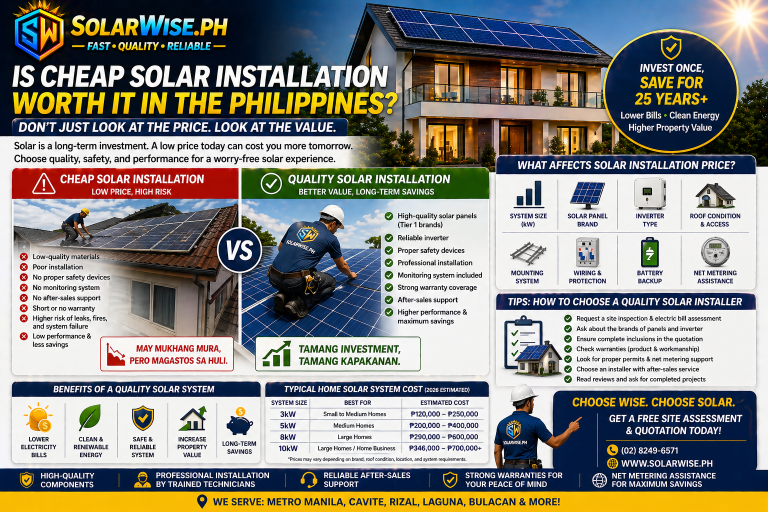
When comparing quotations, always ask for a full breakdown. A cheaper quote may exclude important items such as safety devices, proper mounting materials, monitoring, electrical works, permits, or net metering assistance.
How Many Solar Panels Do You Need for a 5kW System?
The number of panels depends on the wattage of each solar panel.
For example:
If using 550W panels, you may need around 9 to 10 panels
If using 500W panels, you may need around 10 panels
If using 450W panels, you may need around 11 to 12 panels
If using 400W panels, you may need around 12 to 13 panels
Most modern residential solar panels now have higher wattage, so a 5kW solar system can fit on many medium-sized rooftops.
How Much Roof Space Does a 5kW Solar System Need?
A 5kW solar panel system in the Philippines typically needs around 30 to 40 square meters of usable roof space. This depends on panel size, roof shape, tilt, spacing, obstructions, and layout. A 2025 Philippines solar guide also estimates 5kW systems require around 30 to 40 square meters and produce around 18 to 25 kWh per day.
Before installation, a solar provider should check:
Available roof space
Roof direction
Roof material
Roof strength
Shade from trees or nearby buildings
Water tanks, antennas, or roof obstructions
Cable route
Electrical panel location
Possible inverter location
Roof shading is very important. Even partial shading from trees, nearby buildings, or water tanks can reduce solar production.
How Much Power Can a 5kW Solar System Produce?
A well-designed 5kW solar system in the Philippines may produce around 18 to 25 kWh per day, or around 600 to 750 kWh per month, depending on sunlight, weather, roof angle, shading, panel quality, and location. A 2026 guide also estimates a 5kW system can produce around 20 to 25 kWh daily output.
Simple estimate:
| 5kW Solar Output | Estimated Production |
|---|---|
| Daily production | 18 – 25 kWh per day |
| Monthly production | 600 – 750 kWh per month |
| Best production time | Late morning to afternoon |
Actual production may be lower during rainy days, cloudy weather, or if the roof has shading.
Is a 5kW Solar System Enough for a ₱10,000 Meralco Bill?
For many homes, yes. A 5kW solar system Philippines setup can be a good match for a household with around a ₱10,000 Meralco bill solar target, especially if the home uses electricity during daytime hours.
A 5kW system is commonly suitable for homes consuming around 400 to 650 kWh per month, often households with four to six people and one or two air-conditioning units.
A 5kW solar system may be suitable if your home has:
Monthly bill around ₱8,000 to ₱12,000
Moderate to high daytime appliance use
Work-from-home setup
One to two aircon units
Refrigerator running 24/7
Washing machine, fans, lights, Wi-Fi, and devices
Enough roof space for around 9 to 13 panels
Interest in net metering or long-term solar savings
If your monthly bill is below ₱5,000, a 3kW system may be enough. If your bill is above ₱15,000 or you use multiple aircons heavily, a 7kW to 10kW system may be more suitable.
Estimated Savings from a 5kW Solar System
Savings depend on your electricity rate, system output, daytime usage, net metering approval, weather, and roof shading.
One 2026 solar guide estimates a 5kWp system may save around ₱7,432 per month, while another 2026 guide estimates 5kW systems can save around ₱7,200 to ₱9,000 per month at current Meralco rates.
For a homeowner with a ₱10,000 monthly Meralco bill, a 5kW system may reduce a large portion of the bill if the home uses electricity during the day.
However, solar does not always mean zero bill. You may still pay for:
Nighttime electricity usage
Minimum charges
Grid-related charges
Taxes and other charges
Electricity used during rainy days
Power used when solar production is low
Usage above your solar production
The best savings usually happen when major appliances are used while solar panels are producing power.
Best Appliances to Use During Solar Production Hours
To maximize a 5kW solar system, use more electricity during the day when solar production is strongest.
Good daytime loads include:
Aircon during daytime
Washing machine
Refrigerator
Electric fan
Laptop and computer
Wi-Fi router
Water pump
Small kitchen appliances
Phone charging
CCTV and security devices
Work-from-home equipment
Solar production is usually strongest from late morning to early afternoon. Shifting some appliance use to daytime can improve your savings.
5kW Grid-Tied Solar: Best for Bill Savings
A 5kW grid-tied solar system is usually the best setup for homeowners who want lower monthly electricity bills without batteries.
How it works:
Your solar panels generate electricity during the day
Your home uses solar power first
If solar is not enough, power comes from the grid
If there is excess solar power and net metering is approved, it may go to the grid as bill credits
Meralco states that net metering allows qualified renewable energy facilities up to 100 kW to export excess renewable electricity, with the corresponding value credited to the customer’s next bill. Meralco also explains that a bi-directional meter measures both import and export energy.
5kW Hybrid Solar: Best for Backup Power
A 5kW hybrid solar system includes batteries. It costs more than a grid-tied setup, but it can provide backup power during outages.
Hybrid solar may be worth it if you need backup for:
Lights
Wi-Fi
CCTV
Refrigerator
Laptop
Electric fans
Selected outlets
Small home office equipment
Battery backup does not automatically mean your whole house can run normally during a brownout. High-load appliances like aircon, electric stove, microwave, water heater, and large pumps may require a larger inverter and bigger battery capacity.
Choose hybrid solar if backup power is important. Choose grid-tied solar if your main goal is lower monthly electricity bills.
Is a 5kW Solar System Good for Residential Solar?
Yes. A 5kW system is one of the most popular sizes for residential solar in the Philippines. It works well for medium-sized homes and households with higher daytime usage.
A 5kW solar system is ideal for:
Medium-sized homes
3 to 4-bedroom homes
Families with 4 to 6 members
Homes with around ₱8,000 to ₱12,000 monthly bill
Households using one to two aircons
Work-from-home families
Homeowners with 30 to 40 sqm usable roof space
Homeowners who want strong savings without going too large
It may not be enough for very large homes, multiple aircons running all day, or home-based businesses with heavy equipment.
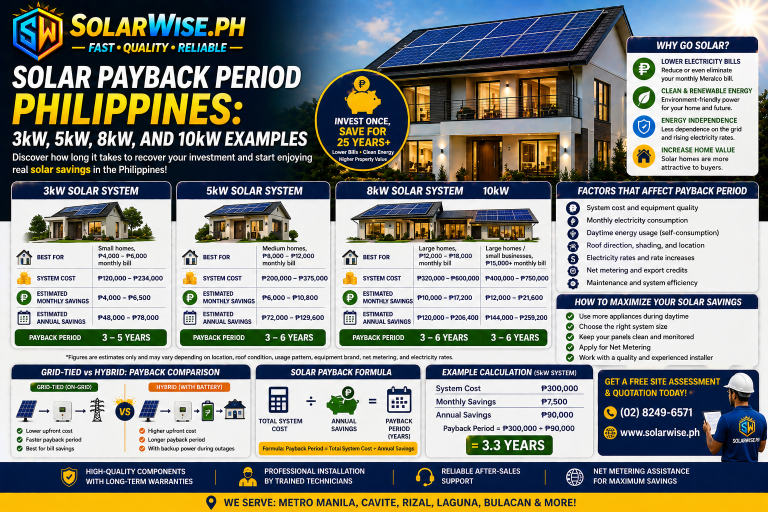
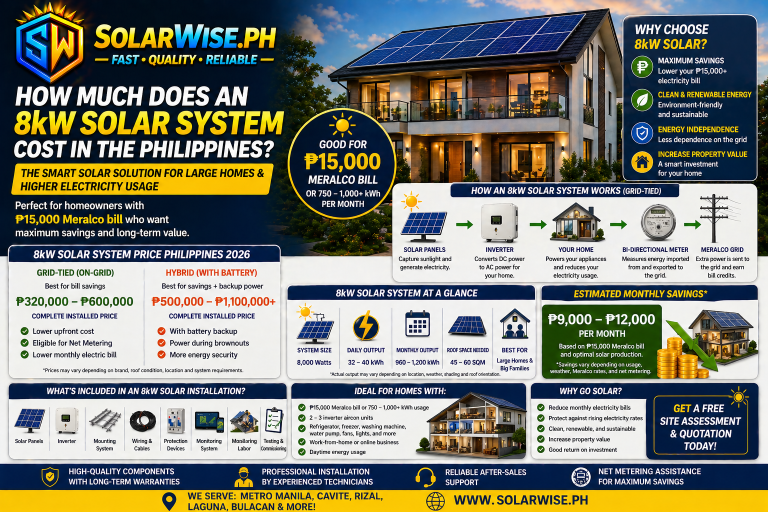
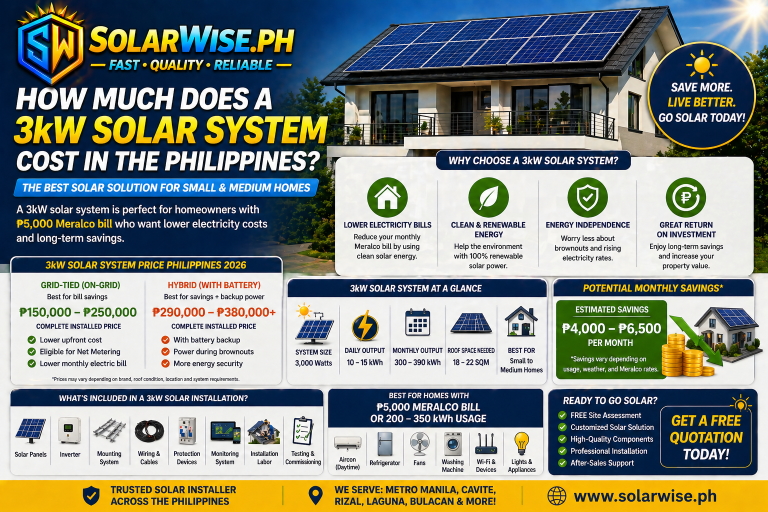
3kW vs 5kW vs 10kW Solar System
| System Size | Estimated Cost | Best For |
|---|---|---|
| 3kW | ₱150,000 – ₱250,000 | Small homes, ₱5,000 bill range |
| 5kW | ₱200,000 – ₱400,000 | Medium homes, ₱10,000 bill range |
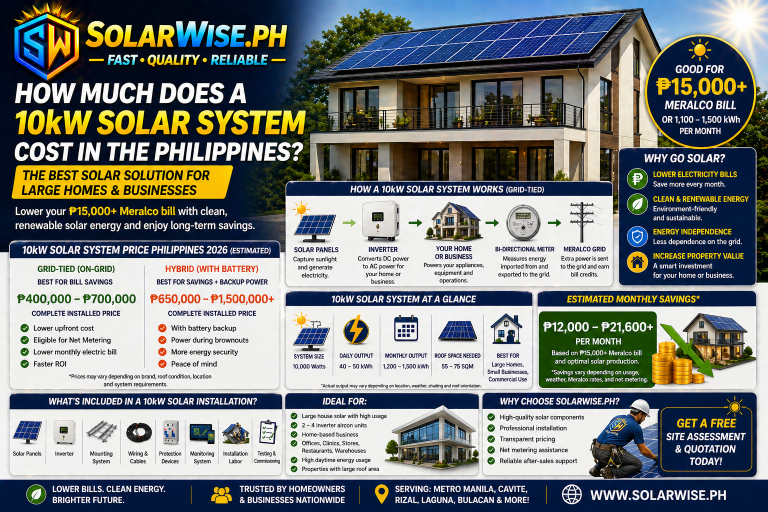
| 10kW | ₱450,000 – ₱700,000+ | Large homes or small businesses |
Choose 3kW if your usage is moderate and your bill is around ₱5,000.
Choose 5kW if your bill is around ₱8,000 to ₱12,000 and you want stronger residential solar savings.
Choose 10kW if your home has very high usage or you run a small business.
Best Areas for 5kW Solar System Installation
A 5kW solar system is suitable for many residential areas in the Philippines, especially homes with good roof space and stable grid access.
Common service areas include:
Metro Manila
Quezon City
Makati
Taguig
Pasig
Mandaluyong
Manila
Las Piñas
Muntinlupa
Parañaque
Alabang
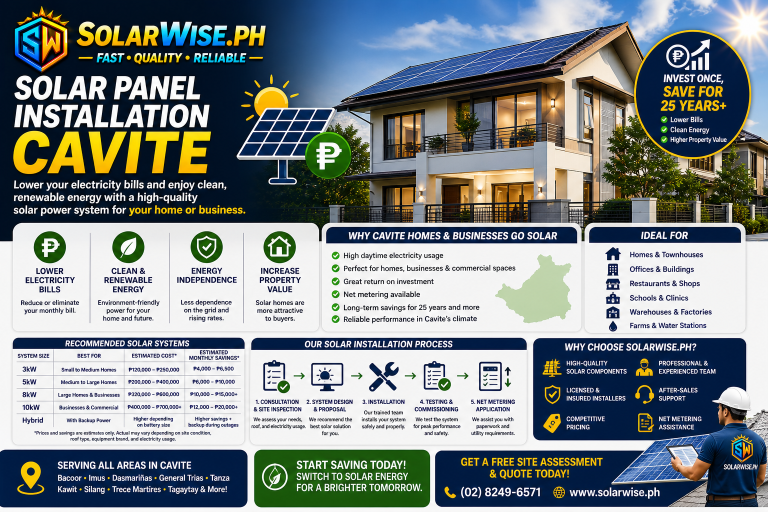
Cavite
Bacoor
Imus
Dasmariñas
General Trias
Tanza
Rizal
Antipolo
Cainta
Taytay
Laguna
Biñan
Santa Rosa
San Pedro
Bulacan
These local keywords help your blog rank for searches such as 5kW solar system Metro Manila, 5kW solar system Cavite, 5kW solar system Rizal, and residential solar near me Philippines.
What Affects the Cost of a 5kW Solar System?
1. Solar Panel Brand
Tier 1 solar panel brands may cost more but often provide better warranties and long-term reliability.
2. Inverter Type
Grid-tied inverters are usually more affordable. Hybrid inverters cost more because they support battery storage.
3. Roof Type
Metal roofs, concrete roofs, tile roofs, and steep roofs may require different mounting methods.
4. Installation Complexity
Multi-level homes, difficult roof access, long cable routes, and electrical upgrades can increase cost.
5. Battery Backup
Adding batteries significantly increases system cost.
6. Net Metering Support
Some installers include net metering assistance, while others charge separately for documentation and processing support.
7. Location
Metro Manila projects may cost slightly higher due to labor, logistics, roof access, and dense urban conditions. One 2026 guide estimates NCR installations can be around 10% to 15% higher than some other regions because of labor cost factors.
Step-by-Step Installation Process
1. Electric Bill Assessment
The installer reviews your Meralco bill, monthly kWh usage, and billing pattern.
2. Roof Inspection
Your roof is inspected for space, shade, direction, condition, and mounting options.
3. System Design
The installer designs the panel layout, inverter capacity, wiring route, estimated output, and savings projection.
4. Quotation
You receive a detailed quote showing system size, panel brand, inverter, materials, labor, warranties, and optional net metering support.
5. Installation
The team installs the mounting structure, solar panels, inverter, wiring, breakers, grounding, and monitoring system.
6. Testing and Commissioning
The system is tested for safety, inverter performance, monitoring, and proper solar production.
7. Net Metering Application
For grid-tied systems, your installer may assist with the net metering process so excess solar power can be credited to your bill.
How to Know If 5kW Is the Right Size for You
A 5kW solar system may be right if:
Your monthly bill is around ₱8,000 to ₱12,000
Your monthly usage is around 400 to 650 kWh
You have a medium-sized home
You use appliances during the day
You use one to two aircons
You have enough roof space
You want strong bill reduction
You do not necessarily need whole-house backup power
You may need a smaller system if your bill is below ₱5,000. You may need a larger system if your bill is above ₱15,000 or if you have heavy daytime loads.
How to Choose a Solar Installer
Choose a solar installer that can properly assess, design, and install your system.
Look for:
Actual site inspection
Electric bill assessment
Proper system sizing
Quality solar panels
Reliable inverter brand
Safe wiring and protection devices
Workmanship warranty
Equipment warranty
Monitoring setup
Net metering assistance
Transparent quotation
After-sales support
A trusted installer should not just sell a standard package. They should explain why 5kW is the right size or why another size may be better.
Frequently Asked Questions
How much does a 5kW solar system cost in the Philippines?
A 5kW solar system in the Philippines commonly costs around ₱200,000 to ₱400,000 for a complete grid-tied installation. Some 2026 guides estimate around ₱192,500 to ₱300,000, while Metro Manila pricing may reach around ₱275,000 to ₱375,000 fully installed depending on equipment and project requirements.
Is a 5kW solar system enough for a ₱10,000 Meralco bill?
Yes, it can be enough for many residential homes with around ₱8,000 to ₱12,000 monthly electric bills, especially if the household uses electricity during the day.
How many panels are needed for a 5kW solar system?
Most 5kW systems need around 9 to 13 solar panels depending on panel wattage.
How much roof space do I need for 5kW solar?
A 5kW solar system typically needs around 30 to 40 square meters of usable roof space.
How much electricity does a 5kW solar system produce?
A 5kW system may produce around 18 to 25 kWh per day or about 600 to 750 kWh per month, depending on sunlight, weather, roof angle, and shading.
Can a 5kW solar system run aircon?
Yes. A 5kW solar system can help offset daytime aircon use, but actual performance depends on aircon size, number of units, operating hours, and other appliances running at the same time.
Do I need batteries for a 5kW solar system?
Not always. If your goal is bill savings, a grid-tied solar system may be enough. If you want backup power during brownouts, choose a hybrid solar setup with batteries.
Can 5kW solar apply for net metering?
Yes. A qualified 5kW grid-tied solar system may apply for net metering, subject to utility requirements and approval. Meralco states net metering applies to qualified renewable energy facilities up to 100 kW.
Conclusion
A 5kW solar system Philippines setup is a strong choice for medium-sized homes and families with around a ₱10,000 Meralco bill solar target. It offers better production than a 3kW system and can significantly reduce monthly electricity costs when properly sized and installed.
For most homeowners, a 5kW grid-tied system is the best option if the goal is lower monthly bills. If backup power during brownouts is important, a 5kW hybrid system with batteries may be worth considering, but it will cost more.
Before installing, start with an electric bill assessment and roof inspection. This ensures your residential solar system is properly sized, safely installed, and designed for long-term savings.