
Solar Panel ROI Philippines: How Long Before You Recover Your Investment?
Kung nagpaplano kang magpa-install ng solar panels sa bahay or business, isa sa pinaka-importanteng tanong is: gaano katagal bago mabawi ang puhunan? This is called solar ROI Philippines or solar return on investment.
For many Filipino homeowners, solar is not just about going green. It is also about lowering monthly electric bills and turning electricity savings into long-term value. The good news is that a properly designed solar power system can help reduce your bill for many years after the system has paid for itself.
In the Philippines, residential solar payback can vary widely depending on system cost, electricity rate, daytime usage, roof condition, system size, and net metering. Conservative estimates place many residential systems around 6 to 9 years, while systems with strong self-consumption and current Meralco-area rates can achieve payback in around 4 to 6 years. Commercial systems with high daytime usage can sometimes recover faster.
What Is Solar ROI?
Solar ROI means the return you get from your solar investment through electricity savings. Instead of paying the full amount to the utility every month, your solar panels generate electricity that your home or business can use.
The more solar energy you use directly, the more electricity you avoid buying from the grid. Over time, these savings help recover your installation cost.
In simple terms:
Solar ROI = savings from solar ÷ total solar investment
The main idea is simple: once your solar system has paid for itself, the electricity savings after that become long-term financial benefit.
What Is Solar Payback Period?
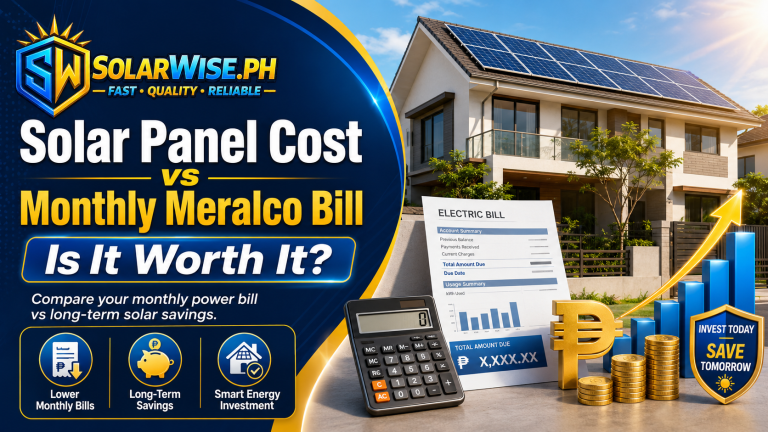
The solar payback period is the number of years it takes to recover your upfront solar installation cost through monthly electric bill savings.
Example:
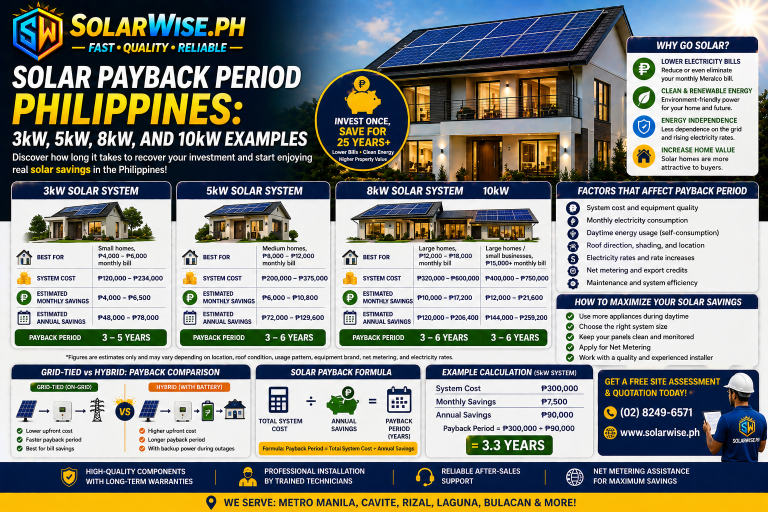
If your solar system costs ₱300,000 and saves you ₱6,000 per month, your yearly savings is ₱72,000.
₱300,000 ÷ ₱72,000 = around 4.2 years payback period
After that period, your system can continue producing electricity and helping reduce your bill for many more years.
Average Solar Payback Period in the Philippines
The average solar payback period in the Philippines depends on actual usage and system design. Some local guides estimate typical Filipino household payback at around 5 to 8 years, while others estimate Metro Manila residential systems at around 6 to 9 years under conservative assumptions and 4 to 6 years when self-consumption is strong.
Here is a practical guide:
| Solar Setup | Typical Payback Estimate | Best For |
|---|---|---|
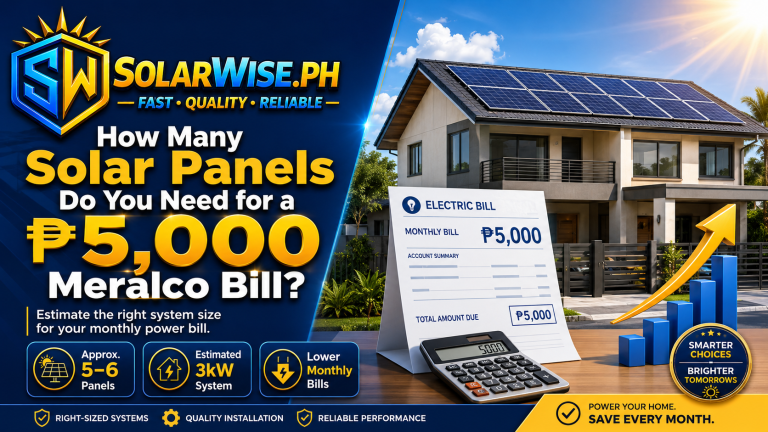
| 3kW Grid-Tied | 4 – 7 years | Small homes, around ₱5,000 bill |
| 5kW Grid-Tied | 4 – 7 years | Medium homes, around ₱8,000–₱12,000 bill |
| 8kW Grid-Tied | 4 – 8 years | Large homes, around ₱12,000–₱18,000 bill |
| 10kW Grid-Tied | 4 – 8 years | Large homes, small businesses |
| Hybrid with Battery | 6 – 10+ years | Homes needing backup power |
| Commercial Solar | 2 – 6 years | Businesses with high daytime usage |
These are estimates only. Actual ROI depends on your installed cost, electricity rate, solar production, and how much electricity you use during the day.
Why Solar ROI Is Stronger When You Use Power During the Day
Solar panels generate electricity during daylight hours. That means your ROI is usually better if your home or business uses power while the sun is out.
Strong daytime usage may include:
Aircon during the day
Work-from-home equipment
Refrigerator and freezer
Washing machine
Water pump
Computers and office equipment
Restaurant or store operations
Clinic or office operations
Laundry or water station equipment
Using solar power directly gives strong savings because it reduces the electricity you buy from the grid at retail rates.
Solar Savings Philippines: How Much Can You Save?
Your solar savings Philippines estimate depends on system size, daily production, electric rate, and usage pattern.
Here is a simple sample guide:
| System Size | Common Monthly Bill Target | Estimated Monthly Savings |
|---|---|---|
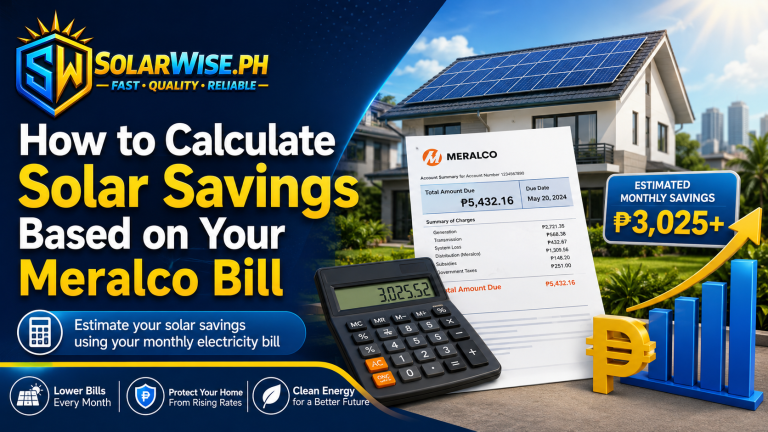
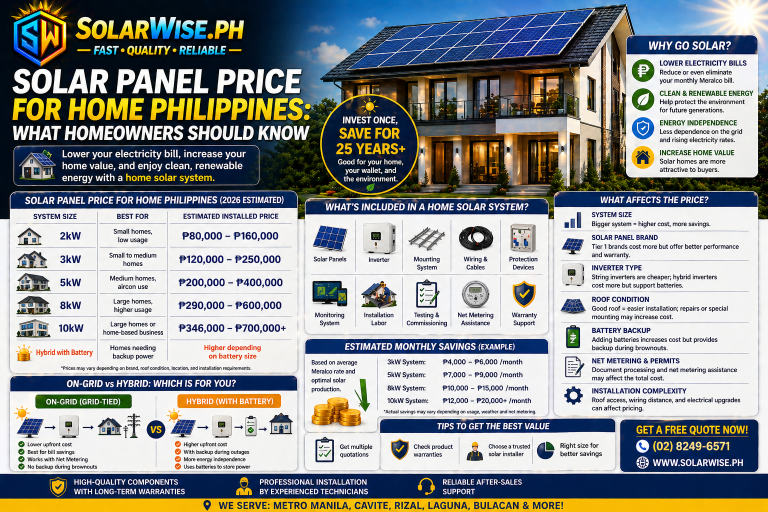
| 3kW | ₱4,000 – ₱6,000 bill | ₱3,000 – ₱6,000 |
| 5kW | ₱8,000 – ₱12,000 bill | ₱5,000 – ₱9,000 |
| 8kW | ₱12,000 – ₱18,000 bill | ₱8,000 – ₱12,000+ |
| 10kW | ₱15,000+ bill | ₱10,000 – ₱18,000+ |
These are practical estimates, not guarantees. Your actual savings may be lower or higher depending on roof angle, shading, weather, electricity rates, appliance use, and net metering approval.
How Net Metering Helps Solar ROI
Net metering can improve solar ROI by giving bill credits for excess solar energy exported to the grid.
Meralco explains that net metering is a program under RA 9513 where qualified customers can install a renewable energy facility up to 100 kW, export excess renewable electricity, and receive its corresponding value as credits on the next bill. Meralco also states that a bi-directional meter measures both imported and exported energy for accurate billing.
This matters because your solar panels may produce more electricity than your home uses during some hours of the day. With net metering, that excess energy can still provide value through bill credits.
Important: Self-Consumption Usually Gives Better ROI
Net metering is helpful, but the best ROI usually comes from using solar power directly.
Why? Because self-consumed solar electricity offsets the retail cost of power you would otherwise buy from the grid. Exported power under net metering is usually credited based on a lower export or generation-related rate, depending on the utility.
That means the best strategy is not always installing the biggest possible system. The best strategy is installing the right-sized system that matches your actual daytime usage.
Sample Solar ROI Calculation
Here is a simple example for a 5kW grid-tied solar system.
| Item | Sample Value |
|---|---|
| System Cost | ₱300,000 |
| Monthly Savings | ₱7,000 |
| Annual Savings | ₱84,000 |
| Estimated Payback | 3.6 years |
Formula:
System Cost ÷ Annual Savings = Payback Period
₱300,000 ÷ ₱84,000 = 3.6 years
This is a simplified estimate. Actual results can vary depending on electricity rates, net metering, weather, shading, and system performance.
What Factors Affect Solar ROI Philippines?
1. System Cost
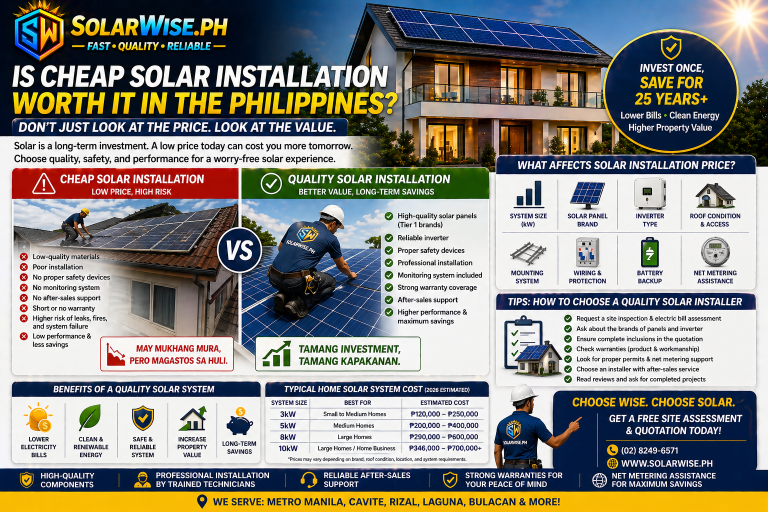
Lower installation cost can improve ROI, but only if quality is not sacrificed. A cheap system with poor installation may lead to lower production, roof leaks, inverter problems, and higher long-term repair costs.
2. Monthly Electric Bill
Homes and businesses with higher monthly bills usually have better ROI because they have more electricity usage to offset.
3. Daytime Electricity Usage
The more energy you use while the sun is shining, the better your savings potential.
4. System Size
A properly sized system improves ROI. An undersized system may not reduce your bill enough, while an oversized system may export too much energy at lower credit value.
5. Roof Direction and Shading
Good sunlight exposure improves solar production. Shading from trees, buildings, antennas, or water tanks can reduce output and slow down payback.
6. Inverter and Solar Panel Quality
Better components may cost more upfront but can improve reliability, production, warranty protection, and long-term performance.
7. Net Metering Approval
For grid-tied systems, net metering can help capture value from excess solar power through bill credits.
8. Battery Backup
Hybrid systems with batteries cost more, so payback is usually longer. Batteries are worth it if backup power is important, but if your only goal is ROI, grid-tied solar is usually more cost-effective.
Grid-Tied vs Hybrid Solar ROI
| Setup Type | ROI Potential | Best For |
|---|---|---|
| Grid-Tied Solar | Faster ROI | Bill savings, net metering, lower upfront cost |
| Hybrid Solar | Slower ROI but adds backup power | Homes needing power during brownouts |
| Off-Grid Solar | Custom ROI | Remote properties without grid access |
For most homeowners, grid-tied solar provides the fastest financial return because it avoids the added cost of batteries.
Hybrid solar is better if you value backup power, comfort, security, and energy independence.
Solar ROI for Homes vs Businesses
Businesses often recover solar investment faster than homes because many businesses operate during the day, exactly when solar panels produce the most electricity.
Commercial systems can have strong ROI because offices, stores, restaurants, clinics, water stations, laundries, warehouses, and small factories often consume electricity during sunlight hours. One Philippine commercial solar guide estimates commercial payback can be around 1.8 to 2.5 years in strong daytime-use cases, while residential payback is often longer.
For homeowners, ROI is still strong if there is enough daytime usage and the system is properly sized.
Local Solar ROI: Metro Manila, Cavite, and Rizal
Metro Manila
Homes and businesses in Quezon City, Makati, Taguig, Pasig, Mandaluyong, Manila, Las Piñas, Muntinlupa, Parañaque, and Alabang often have high electricity usage. Solar ROI can be strong if the roof has enough sunlight and the household uses power during the day.
Cavite
Cavite areas like Bacoor, Imus, Dasmariñas, General Trias, Tanza, Silang, Kawit, and Trece Martires often have homes with good roof space. Families with high daytime usage can benefit from solar savings.
Rizal
Rizal homes in Antipolo, Cainta, Taytay, Angono, Binangonan, San Mateo, and Rodriguez can also benefit from solar. Proper roof inspection is important because trees, slopes, and nearby structures may create shading.
Laguna and Bulacan
Homes and businesses in Laguna and Bulacan may also get strong solar ROI, especially properties with large roofs and daytime electricity use.
How to Improve Your Solar Payback Period
To recover your solar investment faster:
Choose the right system size based on your actual bill
Use more appliances during daytime solar hours
Apply for net metering if your system is grid-tied
Avoid unnecessary oversizing
Keep panels clean and monitored
Fix roof shading issues when possible
Choose reliable equipment and installer
Monitor your solar production regularly
Compare quotes, but do not choose price alone
The fastest ROI usually comes from a properly sized, well-installed grid-tied system with good daytime usage.
Is Solar ROI Better Than Keeping Money in the Bank?
For many homeowners, solar can act like a long-term savings investment. Instead of earning small interest from savings, your solar system reduces a recurring monthly expense.
Example: If your solar saves ₱7,000 monthly, that is ₱84,000 yearly in avoided electricity cost.
But unlike a bank deposit, solar ROI depends on system performance, maintenance, electricity rates, and your usage. That is why good design and installation matter.
Does Solar ROI Mean Zero Electric Bill?
Not always. Solar can reduce your bill significantly, but it does not always eliminate it.
You may still pay for:
Nighttime usage
Minimum charges
Grid charges
Taxes and other charges
Cloudy or rainy day consumption
Power used when solar production is low
Usage beyond your solar output
A realistic goal is to reduce your electric bill and recover your investment over time, not always to guarantee zero bill.
Best Homeowners for Solar ROI
Solar ROI is usually better for homeowners who have:
Monthly electric bills above ₱5,000
Daytime appliance use
Work-from-home setup
Aircon use during the day
Good roof sunlight exposure
Minimal shading
Long-term plans to stay in the property
Interest in net metering
Budget for quality installation
Solar may not be ideal if your bill is very low, your roof is heavily shaded, or you plan to move soon.
How to Choose a Solar Installer for Better ROI
A good installer can help maximize your solar savings by designing the right system for your usage.
Look for:
Electric bill assessment
Actual site inspection
Proper system sizing
Realistic savings estimate
Quality solar panels
Reliable inverter brand
Safe wiring and protection devices
Monitoring system
Net metering assistance
Workmanship warranty
After-sales support
A trusted installer should explain expected payback honestly, not promise unrealistic guaranteed returns.
Frequently Asked Questions
What is solar ROI Philippines?
Solar ROI Philippines refers to the return on investment from installing solar panels, usually measured by how much you save on electricity bills compared to your total installation cost.
What is the average solar payback period in the Philippines?
Residential solar payback is commonly estimated around 5 to 8 years, though some systems can recover faster or slower depending on cost, usage, electricity rates, and net metering.
How do I calculate solar payback period?
Divide your total solar installation cost by your yearly electric bill savings. For example, if your system costs ₱300,000 and saves ₱84,000 per year, the payback period is around 3.6 years.
Does net metering improve solar ROI?
Yes. Net metering can improve ROI by giving bill credits for excess solar power exported to the grid. Meralco states that qualified systems up to 100kW can export excess electricity and receive credits on the next bill.
Is grid-tied solar better for ROI?
Usually, yes. Grid-tied solar often has faster ROI because it has lower upfront cost than hybrid systems with batteries.
Does a hybrid solar system have good ROI?
Hybrid solar can still provide value, but the payback period is usually longer because batteries add cost. It is best for homeowners who need backup power during outages.
How much can I save with solar panels in the Philippines?
Savings vary by system size and usage. Many homeowners save several thousand pesos per month, especially when their solar system is properly sized and they use electricity during the day.
Is solar worth it in Metro Manila, Cavite, and Rizal?
Yes, solar can be worth it in Metro Manila, Cavite, and Rizal for homes and businesses with high electricity bills, good roof sunlight, and daytime electricity usage.
Conclusion
Solar ROI Philippines depends on system cost, monthly electric bill, daytime usage, roof condition, net metering, and installation quality. For many Filipino homeowners, the solar payback period can range from around 5 to 8 years, while well-designed systems with strong daytime usage may recover faster.
If your goal is fastest ROI, a properly sized grid-tied solar system is usually the best option. If your goal includes backup power during brownouts, a hybrid system with batteries may be worth it even with a longer payback period.
Before installing, start with an electric bill assessment and roof inspection. This helps ensure your solar system is designed for real savings, safe installation, and long-term value.