
What Happens to Excess Solar Power in the Philippines?
Kung may solar panels ka sa bahay or planning kang magpa-install, isang common question ng homeowners is: what happens to excess solar power in the Philippines? Kapag malakas ang araw at mas marami ang production ng solar panels kaysa sa ginagamit ng bahay, saan napupunta ang sobrang kuryente?
The answer depends on your solar setup.
For a properly installed grid-tied solar system with net metering, excess solar power can be exported to the grid and converted into bill credits. For a hybrid solar system with batteries, excess solar energy may be stored in batteries for later use. For a zero-export system, excess power is controlled so it does not flow back to the grid.
Understanding how excess solar power Philippines works is important because it affects your savings, system design, and return on investment.
What Is Excess Solar Power?
Excess solar power is the extra electricity your solar panels produce when your home is not using all the solar energy being generated.
For example, your solar panels may produce the most electricity from late morning to afternoon. But if your family is not home, appliances are off, and your daytime usage is low, your solar system may generate more electricity than your home needs at that moment.
That unused electricity becomes excess solar power.
In simple terms:
Solar panels produce electricity
Your home uses what it needs first
Extra solar power becomes excess energy
That excess energy may go to the grid, battery, or be limited depending on your setup
What Happens to Excess Solar Power in a Grid-Tied System?
In a grid-tied solar system, your solar panels are connected to your home and the utility grid. During the day, your home uses solar power first. If your solar system produces more electricity than your home needs, the excess can flow back to the distribution grid if your system is approved for net metering.
Meralco explains that under net metering, excess renewable electricity produced by a qualified system can be exported to Meralco, and its corresponding value is given as credits on the customer’s next bill. Meralco also states that net metering uses a bi-directional meter to measure both import and export energy for accurate billing.
This is one of the best ways to maximize solar savings for homeowners in the Philippines.
What Is Net Metering?
Net metering is a renewable energy program under the Renewable Energy Act of 2008 or RA 9513. It allows qualified end-users to generate electricity from renewable energy systems, such as solar panels, primarily for their own use and sell unused electricity to the grid.
For homeowners, this usually means installing a grid-tied rooftop solar system. When your solar panels produce more energy than your home uses, the excess electricity is exported to the grid and credited to your bill.
Meralco states that net metering applies to renewable energy facilities with capacity up to 100 kW. Any excess renewable electricity produced can be exported and converted into bill credits.
Does Excess Solar Power Become Cash?
Usually, excess solar power becomes bill credits, not direct cash.
Under net metering, exported solar energy is credited to your electricity bill. These credits help reduce your next bill. The main benefit is that you pay less for electricity over time.
For homeowners, the best savings usually come from two sources:
First, you use solar power directly during the day, which reduces the electricity you buy from the grid.
Second, any qualified excess solar energy exported to the grid may become bill credits through net metering.
The DOE guide explains that electricity generated for your own use offsets the retail rate of electricity, while excess electricity exported to the distribution utility earns peso credits based on the utility’s blended generation cost, excluding other generation adjustments.
Important: Direct Solar Use Usually Gives Better Savings
One important thing to know is that using solar power directly in your home often gives better savings than exporting it.
Why? Because self-consumed solar power reduces the electricity you buy from the grid at the retail rate. Exported excess solar energy is usually credited based on the utility’s blended generation cost, which may be lower than the full retail electricity rate.
This is why proper system sizing is very important. Hindi laging mas maganda ang sobrang laking solar system. If the system is too big and your home cannot use much of the energy during the day, you may export too much energy at a lower credit value.
A good solar installer should design your system based on your actual daytime usage, not just your monthly bill.
What Happens to Excess Solar Power in a Hybrid Solar System?
In a hybrid solar system, excess solar power can charge batteries. This stored energy can be used later, usually at night or during power outages.
This is useful for homeowners who want backup power for:
Lights
Wi-Fi
CCTV
Refrigerator
Fans
Selected outlets
Important appliances
Hybrid solar is more expensive than a standard grid-tied system because batteries and hybrid inverters add cost. However, it can provide more energy security.
For homes that experience brownouts or need backup power, hybrid solar may be a good option.
What Happens to Excess Solar Power in an Off-Grid System?
In an off-grid solar system, there is no connection to the utility grid. Excess solar power usually charges batteries first. Once the batteries are full and there is no additional load, the system may limit or stop additional charging to protect the batteries.
Off-grid systems are more common in remote areas, farms, rest houses, or properties without reliable grid access.
For most homes in Metro Manila, Cavite, Rizal, Laguna, and Bulacan, a grid-tied or hybrid system is usually more practical than off-grid solar.
What Is Zero Export Solar?
A zero-export solar system is designed to prevent excess solar power from flowing back to the grid. This setup uses controls or inverter settings to limit solar production based on your home’s actual consumption.
Zero export may be used when a customer wants solar for self-consumption but does not want or cannot export energy to the grid.
Meralco’s net metering information notes that any renewable energy installation above 100 kWp is no longer covered by net metering and may fall under Zero Export or Distributed Energy Resources.
For residential homeowners, zero export may also be considered if net metering is not yet approved or if the system is specifically designed to avoid export.
Why Excess Solar Power Matters for Homeowners
Understanding excess solar power matters because it affects your savings.
If your system is properly sized, most of your solar production can be used directly by your home, with some excess exported for bill credits.
If your system is too large, too much energy may be exported instead of self-consumed.
If your system is not registered properly, you may not receive proper credits for exported energy.
If your system has batteries, excess power can be stored but your upfront cost will be higher.
That is why the best solar setup depends on your daily usage pattern, monthly kWh consumption, roof space, and savings goal.
Can Excess Solar Power Reduce Your Electric Bill?
Yes. Excess solar power can reduce your bill if your system is approved for net metering and properly connected to the grid.
Here is how solar savings usually happen:
Your home uses solar power during the day
You buy less electricity from the grid
Excess solar energy is exported if net-metered
Exported energy becomes bill credits
Your electricity bill becomes lower
However, solar does not always mean zero bill. You may still pay for nighttime usage, minimum charges, taxes, grid-related charges, and power used when solar production is low.
What If Your Solar System Is Not Enrolled in Net Metering?
If your solar system exports power to the grid but is not properly enrolled in net metering, you may not receive bill credits.
This is why homeowners should not just install a grid-tied solar system without understanding utility registration and meter requirements.
Meralco specifically advises customers to register solar installations and states that net metering ensures a renewable energy facility is safely connected to the grid through a bi-directional meter that measures import and export energy.
Before exporting solar energy, make sure your installer helps you with the correct net metering process.
What Is a Bi-Directional Meter?
A bi-directional meter measures electricity in two directions:
Electricity imported from the grid
Electricity exported from your solar system
This is different from a regular meter, which is mainly designed to measure electricity you consume from the grid.
For net metering, the bi-directional meter is important because it records how much excess solar electricity you export and how much electricity you import when your solar panels are not enough.
Best Solar Setup to Handle Excess Solar Power
The best setup depends on your goal.
Choose grid-tied solar with net metering if you want lower electric bills and bill credits for excess solar power.
Choose hybrid solar with batteries if you want backup power and want to store extra solar energy.
Choose zero export solar if you want solar self-consumption but do not want exported power going to the grid.
Choose off-grid solar if your property has no grid connection.
For most homeowners in the Philippines, especially in urban and suburban areas, grid-tied solar with net metering is the most practical option.
Recommended System Size to Avoid Wasted Excess Solar Power
The right system size helps prevent overspending and excessive unused energy.
Here is a simple guide:
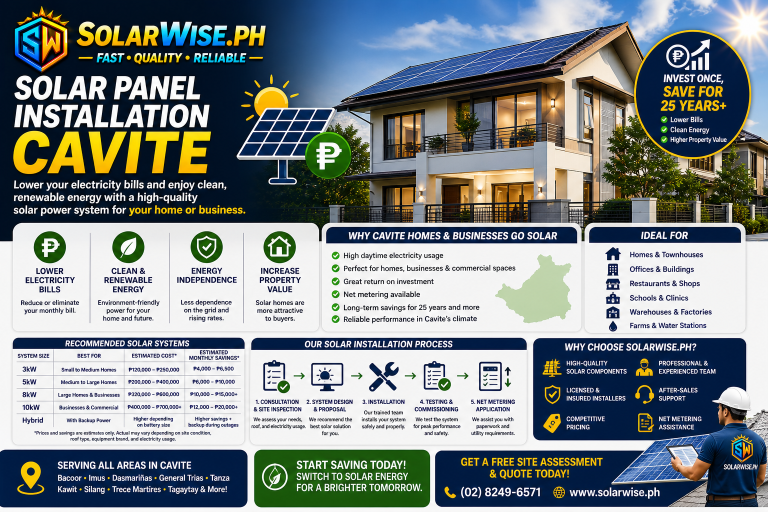
| Monthly Electric Bill | Suggested Solar Size | Setup Recommendation |
|---|---|---|
| ₱3,000 – ₱5,000 | 2 kW – 3 kW | Grid-tied starter setup |
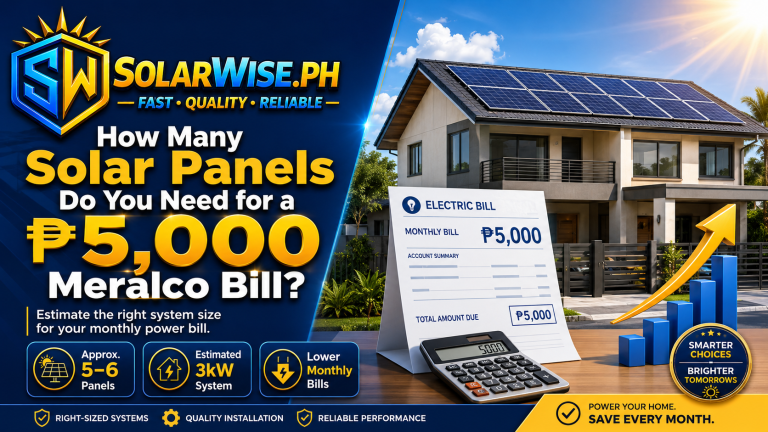
| ₱5,000 – ₱8,000 | 3 kW – 5 kW | Grid-tied with net metering |
| ₱8,000 – ₱12,000 | 5 kW – 7 kW | Grid-tied or hybrid-ready |
| ₱12,000 – ₱18,000 | 7 kW – 10 kW | Grid-tied or hybrid |
| ₱18,000 and above | 10 kW and above | Custom solar design |
These are estimates only. The best size should be based on your actual kWh usage, roof space, daytime load, and net metering plan.
Excess Solar Power in Metro Manila, Cavite, and Rizal
Many homeowners in Metro Manila, Cavite, and Rizal are now asking what happens to extra solar power because these areas have high electricity demand and many homes are suitable for rooftop solar.
Metro Manila
Homes in Quezon City, Makati, Taguig, Pasig, Mandaluyong, Manila, Las Piñas, Muntinlupa, Parañaque, and Alabang can benefit from solar if they have available roof space and strong sunlight exposure.
Cavite
Homes in Bacoor, Imus, Dasmariñas, General Trias, Tanza, Kawit, Silang, Trece Martires, and Tagaytay often have good roof space for solar panels.
Rizal
Homes in Antipolo, Cainta, Taytay, Angono, Binangonan, San Mateo, Rodriguez, and Tanay can also benefit from rooftop solar, especially if they use electricity during the day.
For these areas, a grid-tied solar system with net metering can help convert excess solar energy into bill credits, subject to approval and proper installation.
Common Mistakes to Avoid
Oversizing the Solar System
A bigger system does not always mean better savings. The system should match your actual usage.
Installing Without Net Metering Planning
If you want export credits, plan for net metering from the start.
Ignoring Daytime Usage
Solar produces electricity during the day. If your daytime usage is low, you may export more energy than expected.
Choosing the Cheapest Installer
Poor installation can cause safety issues, poor performance, and net metering delays.
Not Checking Roof Shading
Trees, nearby buildings, water tanks, and antennas can reduce production and affect savings.
How to Maximize Excess Solar Power
To get the most value from your solar panels:
Use major appliances during the day when solar production is high.
Install the right system size based on actual usage.
Apply for net metering if your system is grid-tied.
Consider batteries if backup power is important.
Monitor your solar production through the inverter app.
Work with a trusted solar installer who understands utility requirements.
Frequently Asked Questions
What happens to excess solar power in the Philippines?
Excess solar power may be exported to the grid through net metering, stored in batteries in a hybrid system, or limited by a zero-export setup depending on your solar system design.
Can I sell excess solar power in the Philippines?
Through net metering, qualified homeowners can export unused solar electricity to the distribution grid and receive bill credits. The DOE describes net metering as allowing end-users to generate electricity primarily for own use and sell unused electricity to the grid.
Does Meralco buy excess solar power?
Under Meralco net metering, excess renewable electricity from qualified systems may be exported to Meralco and converted into bill credits on the next bill.
Is excess solar power credited at the full electricity rate?
Not usually. The DOE guide explains that exported excess electricity earns peso credits equivalent to the distribution utility’s blended generation cost, while solar energy used directly at home offsets the full retail cost of electricity.
Do I need batteries for excess solar power?
Not always. If you have grid-tied solar with net metering, excess power can be exported for bill credits. If you want backup power or nighttime use from stored solar energy, batteries may be useful.
What happens if my batteries are full?
In a hybrid or off-grid system, once batteries are full and there is no additional demand, the system may limit solar production or stop charging to protect the batteries.
Can excess solar power make my bill zero?
It can reduce your bill significantly, but it does not always make it zero. You may still pay for nighttime usage, minimum charges, taxes, grid charges, and electricity used when solar production is low.
What is the best setup for excess solar power?
For most Filipino homes, grid-tied solar with net metering is the most practical setup. For homes needing backup power, hybrid solar with batteries may be better.
Conclusion
So, what happens to excess solar power Philippines homeowners produce? It depends on your solar setup. With grid-tied solar and net metering, excess solar electricity can be exported to the grid and converted into bill credits. With a hybrid system, extra solar energy can be stored in batteries. With zero export, the system prevents excess electricity from going to the grid.
For most homes in Metro Manila, Cavite, Rizal, and nearby areas, the best option is a properly sized grid-tied solar system with net metering. This allows you to use solar power during the day, reduce electricity bought from the grid, and earn credits for excess solar energy.
Before installing solar panels, work with a reliable solar provider who can assess your bill, inspect your roof, design the right system, and assist with net metering requirements.