
How Much Can You Save With Solar Panels in the Philippines?
Electricity costs in the Philippines continue to be one of the biggest monthly expenses for many homes and businesses.
That is why more people are now asking:
“How much can I really save with solar panels?”
The answer depends on your monthly electric bill, your actual power consumption, your roof space, your daytime usage, and the type of solar system installed.
In this guide, we will explain how solar panel savings Philippines estimates work, what affects your monthly savings, and how solar can help you lower electric bill Philippines households and businesses are paying every month.
Why Solar Panel Savings Matter in the Philippines
For many Filipino homeowners, the monthly electric bill is not just a small expense.
It can reach ₱8,000, ₱15,000, ₱30,000, or even higher depending on the size of the property, number of aircons, business operations, and appliance usage.
Solar panels help reduce your electric bill by producing electricity from sunlight during the day.
Instead of buying all your electricity from the grid, your home or business can use solar energy first.
This means less electricity pulled from Meralco or your local electric provider, which can lead to lower monthly bills.
How Solar Panels Help Lower Your Electric Bill
Solar panels work by converting sunlight into electricity.
During the day, your solar system produces power that can be used by your appliances.
For example, your solar power can help run:
Air conditioners
Refrigerators
Water pumps
Lights
Computers
Office equipment
Washing machines
Business equipment
If your solar system produces enough power during the day, you can reduce how much electricity you buy from the grid.
That is where your solar savings come from.
How Much Can You Save With Solar Panels?
There is no one fixed amount because every property is different.
But in general, the higher your monthly electric bill, the higher your possible savings.
Here is a simple example:
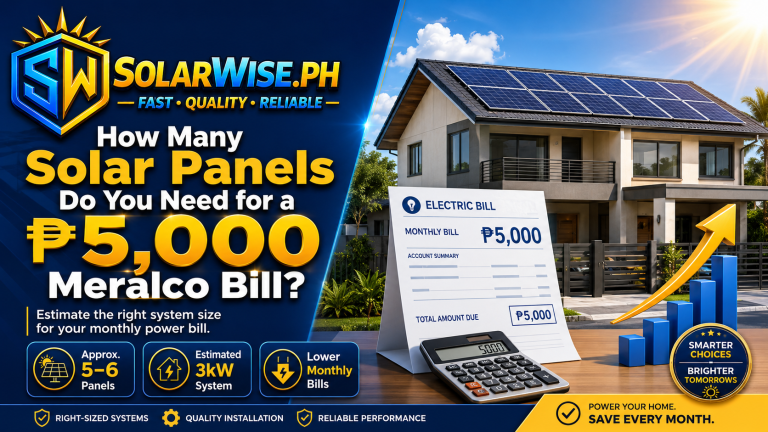
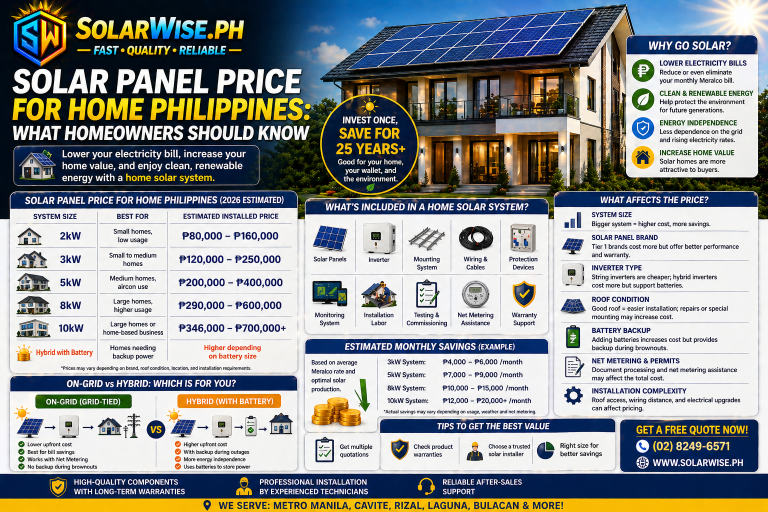
Monthly electric bill: ₱10,000
Possible solar savings: ₱5,000 to ₱8,000 per month
Monthly electric bill: ₱15,000
Possible solar savings: ₱8,000 to ₱13,000 per month
Monthly electric bill: ₱30,000
Possible solar savings: ₱18,000 to ₱25,000 per month
These are sample estimates only. Actual savings may vary depending on your solar system size, roof condition, location, shading, weather, battery capacity, net metering status, and how you use electricity.
What Affects Solar Panel Savings in the Philippines?
Your actual solar savings depend on several important factors.
1. Your Monthly kWh Consumption
Your electric bill amount is important, but your kWh consumption is even more important.
The kWh number on your bill shows how much electricity you actually used.
For example:
If your monthly consumption is 900 kWh, your average daily usage is:
900 kWh ÷ 30 days = 30 kWh per day
This number helps determine the right solar system size for your property.
2. Your Daytime Electricity Usage
Solar panels produce the most power during daytime.
This means you get better savings if you use more electricity while the sun is available.
Solar is usually very effective for:
Homes with daytime aircon use
Businesses operating during the day
Offices
Clinics
Restaurants
Schools
Small warehouses
Commercial establishments
If most of your usage happens at night, you may need a hybrid solar system with battery storage to maximize your savings.
3. Solar System Size
The size of your solar system affects how much electricity it can produce.
A small system may reduce part of your bill.
A properly sized system can reduce a larger portion of your monthly electricity cost.
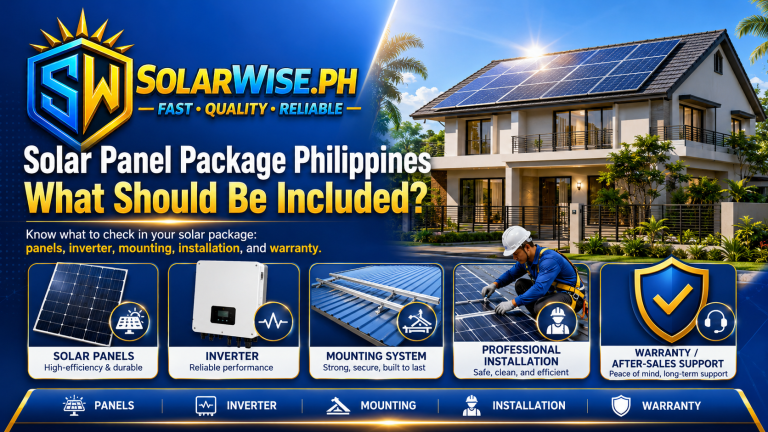
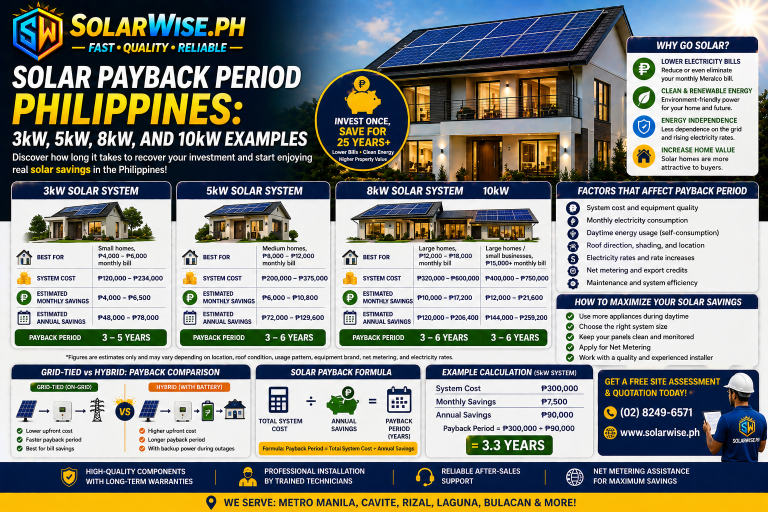
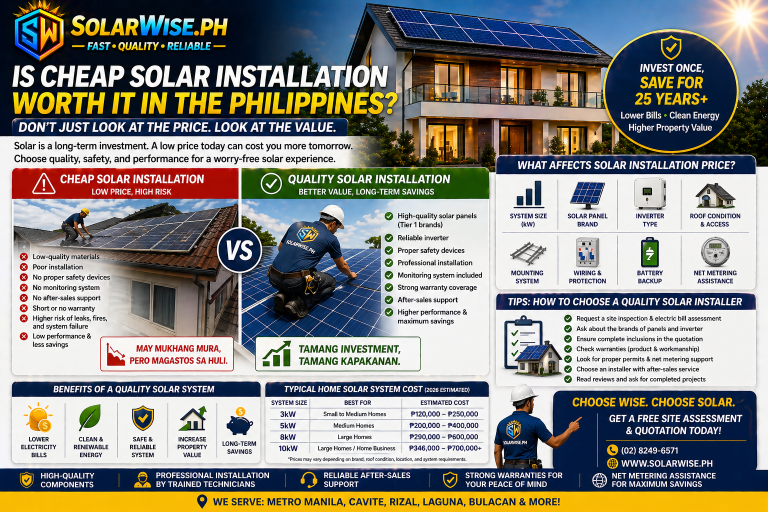
Common residential and small business system sizes include:
3kW solar system
5kW solar system
6kW solar system
8kW solar system
10kW solar system
12kW solar system
Larger homes and businesses may require bigger systems depending on consumption and available roof space.
4. Roof Space and Sun Exposure
Your roof plays a big role in your solar savings.
Good solar production usually needs:
Enough roof space
Minimal shading
Strong sunlight exposure
Proper panel direction
Safe mounting area
Trees, nearby buildings, water tanks, and roof obstructions can reduce solar output.
That is why a roof assessment is important before finalizing the system design.
5. Battery Storage
A battery is useful if you want to store excess solar energy and use it later.
This is helpful for:
Nighttime usage
Brownout backup
Areas with unstable power
Homes that want more energy independence
Hybrid solar systems with batteries usually cost more upfront, but they can provide more flexibility and backup power.
6. Net Metering
Net metering allows eligible solar users to export excess electricity back to the grid and receive credits.
This can help improve savings, especially for grid-tied systems that produce more power during the day than the property uses.
However, net metering approval, requirements, and actual credits may vary.
That is why it is best to discuss this during your solar estimate.
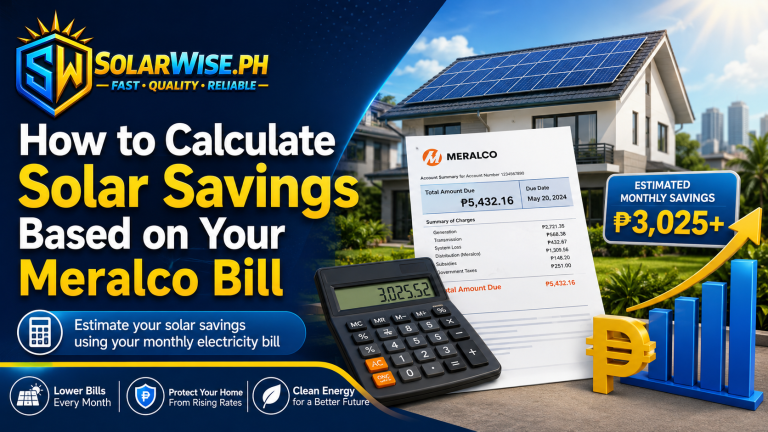
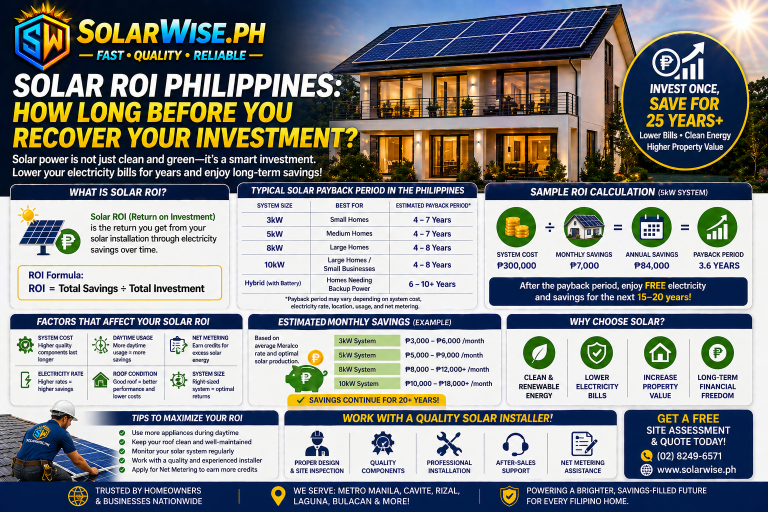
Sample Solar Savings Calculation
Let’s say your monthly electric bill is around ₱15,000.
Your estimated monthly kWh consumption is around 1,250 kWh if the average rate is about ₱12 per kWh.
Your average daily consumption is:
1,250 kWh ÷ 30 days = 41.6 kWh per day
A solar provider may recommend a system around 10kW, depending on your roof space, daytime usage, battery needs, and actual load profile.
If your system produces around 1,100 to 1,300 kWh per month, your possible monthly savings may be around:
₱10,000 to ₱15,000 per month
Again, this is only a sample estimate. Actual solar panel savings in the Philippines depend on site conditions and actual usage.
Can Solar Panels Make Your Electric Bill Zero?
Sometimes, yes.
But it is not always guaranteed.
A zero bill depends on:
Your solar system size
Your actual consumption
Your daytime usage
Your night usage
Battery capacity
Net metering approval
Weather conditions
Roof shading
Grid charges and minimum charges
Some clients can achieve very low bills, while others may only reduce a large portion of their bill.
Solar should be designed properly based on your target savings, not just based on the cheapest package available.
Grid-Tied vs Hybrid Solar Savings
There are two common solar setups in the Philippines: grid-tied and hybrid.
Grid-Tied Solar System
A grid-tied system is connected to the utility grid.
It helps lower your electric bill by supplying solar power during the day.
This setup is usually more affordable than hybrid because it does not require batteries.
Best for:
Homes with strong daytime usage
Businesses open during the day
Clients focused mainly on savings
Properties eligible for net metering
Main limitation:
A standard grid-tied system usually does not provide backup power during brownouts.
Hybrid Solar System
A hybrid solar system includes battery storage.
It can help lower your electric bill and provide backup power during power interruptions.
Best for:
Homes with night usage
Clients who want battery backup
Areas with frequent brownouts
Businesses that need power security
Clients who want more energy independence
Main limitation:
Higher upfront cost because of the battery system.
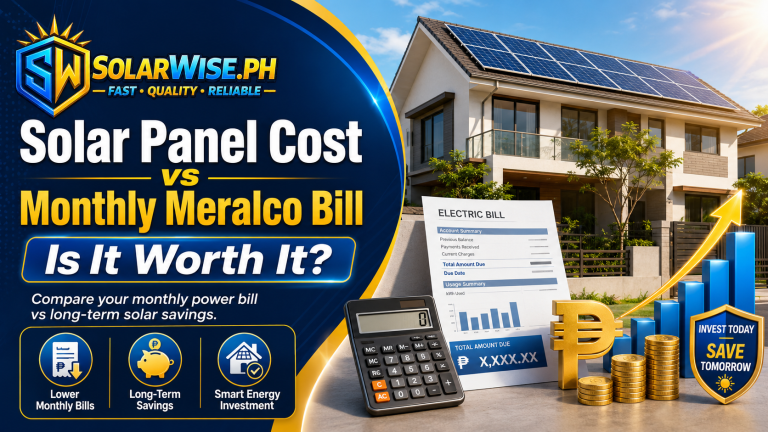
Is Solar Worth It for Filipino Homes?
Solar may be worth it for homes with consistent monthly electricity usage.
It is especially worth considering if:
Your electric bill is ₱8,000 and above
You use aircon regularly
You have good roof space
You use appliances during the day
You want protection from rising electricity costs
You want long-term savings
You plan to stay in the property for several years
You want backup power with batteries
For lower bills, solar may still help, but the return on investment may take longer.
Is Solar Worth It for Businesses?
Solar can be very attractive for businesses because many businesses operate during the day.
This matches the time when solar panels are producing the most power.
Solar may be a good investment for:
Offices
Clinics
Restaurants
Schools
Warehouses
Small factories
Retail stores
Commercial buildings
Apartments and rental properties
If your business has high daytime consumption, solar can help reduce operating expenses and improve long-term cash flow.
How to Maximize Solar Panel Savings
To get better results from your solar system, use your electricity wisely.
Here are practical tips:
Use high-load appliances during daytime.
Run washing machines, water pumps, ironing, and heavy equipment when solar production is strong.
Keep solar panels clean and free from heavy dirt.
Trim trees that may create shading.
Monitor your solar production regularly.
Use battery power wisely at night.
Avoid oversizing or undersizing your system.
Ask about net metering if applicable.
Choose a trusted solar installer with proper design and after-sales support.
The goal is not just to install panels.
The goal is to install the right system for your actual usage.
Common Mistake: Expecting the Same Savings as Other Homes
One common mistake is comparing your solar savings with another homeowner.
For example, your neighbor may have the same 10kW system but different savings.
Why?
Because you may have different:
Appliance usage
Daytime and nighttime load
Roof direction
Shading
Battery capacity
Aircon usage
Family size
System settings
Net metering status
That is why solar savings should always be calculated based on your own electric bill and usage pattern.
What You Need for an Accurate Solar Estimate
To estimate your possible solar panel savings Philippines homeowners and business owners should prepare:
Latest electric bill
Last 3 to 6 months of bills, if available
Monthly kWh consumption
Roof photos
Main breaker photo
List of major appliances
Daytime and nighttime usage
Preferred system type: grid-tied, hybrid, or off-grid
Battery backup needs
Budget range
With these details, SolarWise.PH can recommend a better system size and more realistic savings estimate.
Final Thoughts
So, how much can you save with solar panels in the Philippines?
The answer depends on your monthly bill, kWh usage, roof space, daytime consumption, battery needs, and system design.
For many homes and businesses, solar can help lower monthly electricity costs and provide long-term protection from rising power rates.
But the most important factor is proper sizing.
A well-designed solar system can help you reduce your electric bill and make better use of the sunlight available in the Philippines.
If you want to know your estimated solar savings based on your actual electric bill, SolarWise.PH can help.
Message SolarWise.PH today for a FREE solar estimate.
Serving Metro Manila: Quezon City, Makati, Taguig, Pasig, Parañaque, Las Piñas.