
Solar Panel Installation in Quezon City: Homeowner’s Guide to Solar Savings
Kung homeowner ka sa Quezon City at mataas na ang monthly Meralco bill mo, isa sa pinaka-practical na long-term solution today is solar panel installation in Quezon City. With the right solar power system, puwede mong bawasan ang electricity cost, maximize daytime energy use, and improve the energy efficiency of your home.
Quezon City is one of the busiest and most populated cities in Metro Manila. Maraming bahay, townhouses, apartments, commercial buildings, home offices, clinics, schools, restaurants, and small businesses ang may mataas na electricity usage. Because of this, more QC homeowners are now considering rooftop solar panels as a smart investment.
But before ka magpa-install, mahalagang maintindihan ang cost, process, best system size, expected savings, and net metering options. This guide will help you understand everything you need to know before getting solar panels for your Quezon City home.
Why Solar Panel Installation in Quezon City Is a Smart Investment
Quezon City households often use electricity heavily throughout the day and night. Aircon, refrigerators, washing machines, computers, water pumps, CCTV systems, Wi-Fi, and kitchen appliances can all contribute to high monthly bills.
With solar panel installation Quezon City, your rooftop solar system can generate electricity during the day. Instead na lahat ng power mo ay galing sa grid, part of your home’s energy consumption can come directly from sunlight.
This means possible monthly savings, better energy control, and long-term protection from rising electricity rates.
Solar panels are especially helpful for QC homes with:
High monthly electricity bills
Daytime appliance usage
Work-from-home setup
Multiple air-conditioning units
Large roof area
Minimal roof shading
Long-term residence plans
Home-based business operations
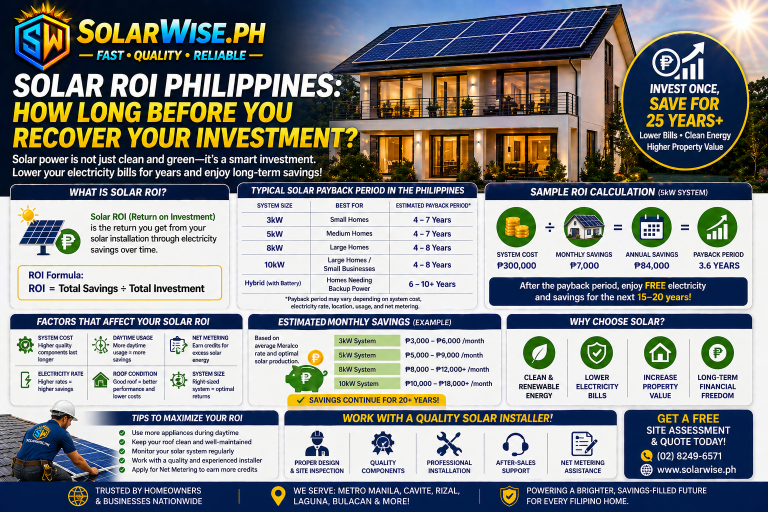
For many homeowners, solar is not just an expense. It is an investment that can pay back over time through electricity savings.
How Much Does Solar Panel Installation Cost in Quezon City?
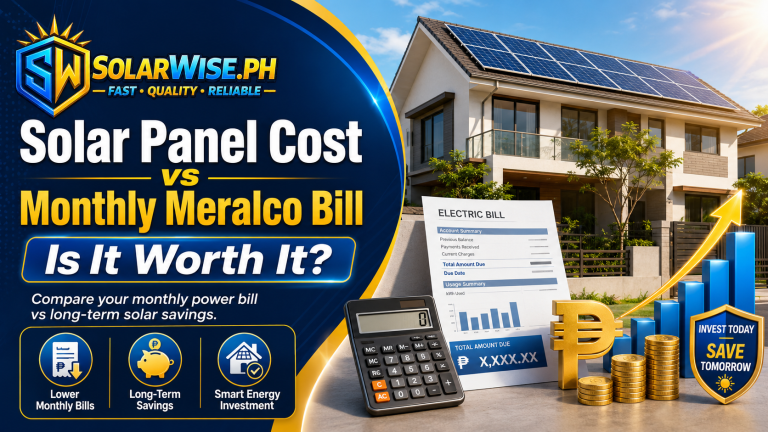
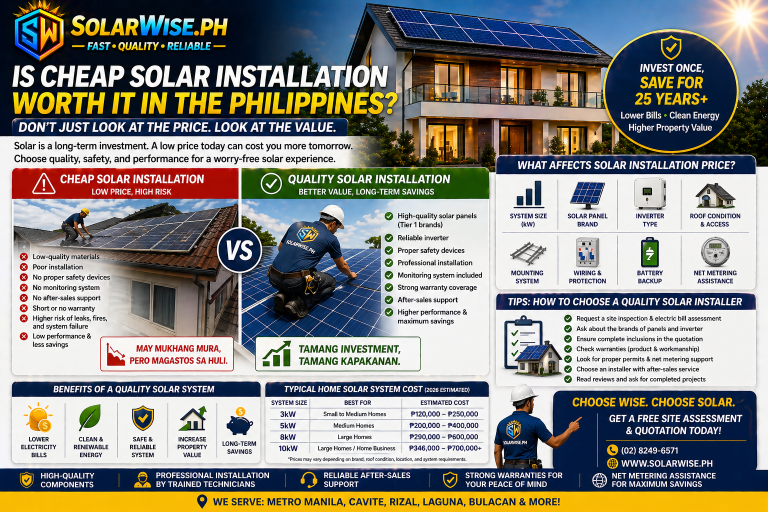
The cost of solar panel installation in Quezon City depends on system size, roof type, inverter brand, panel quality, wiring distance, battery requirement, and installation complexity.
As a general 2025 Philippine pricing guide, grid-tied residential solar systems often cost around ₱45,000 to ₱60,000 per kW for a properly installed turnkey system. Common package estimates include around ₱150,000 to ₱250,000 for 3 kW, ₱250,000 to ₱400,000 for 5 kW, and ₱450,000 to ₱700,000 for 10 kW systems.
Another Philippines-based solar cost guide estimates 2025 grid-tied systems at around ₱165,000 to ₱235,000 for 3 kW, ₱280,000 to ₱380,000 for 5 kW, and ₱420,000 to ₱600,000 for 10 kW, depending on equipment and project requirements.
Here is a practical estimated cost table for homeowners:
| Solar System Size | Best For | Estimated Cost Range |
|---|---|---|
| 2 kW | Small home, low daytime usage | ₱100,000 – ₱160,000 |
| 3 kW | Small to medium QC homes | ₱150,000 – ₱250,000 |
| 5 kW | Medium homes with aircon use | ₱250,000 – ₱400,000 |
| 7 kW | Larger homes, high usage | ₱350,000 – ₱500,000 |
| 10 kW | Large homes or home-based businesses | ₱450,000 – ₱700,000+ |
These are estimated prices only. The actual quotation may vary depending on your roof condition, electrical layout, panel brand, inverter type, permits, and whether you choose grid-tied or hybrid solar.
Best Solar System Size for Quezon City Homes
The best solar system size depends on your actual electricity consumption. Hindi dapat hulaan ang system size. Dapat based ito sa Meralco bill, average kWh usage, roof space, and daytime energy consumption.
Here is a simple homeowner guide:
| Monthly Electric Bill | Suggested Solar System Size |
|---|---|
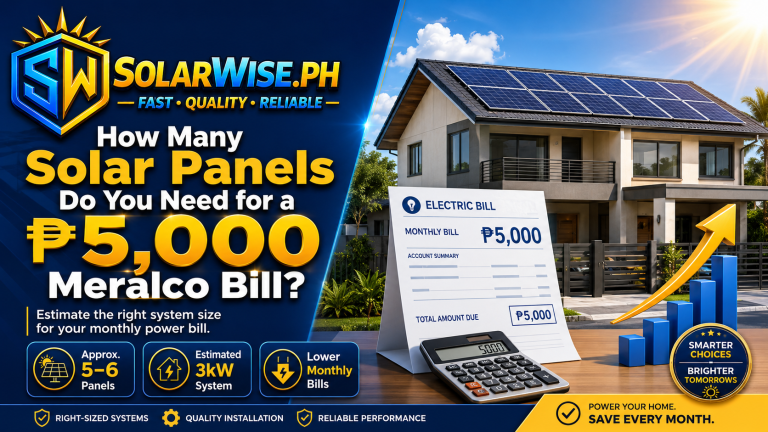
| ₱3,000 – ₱5,000 | 2 kW – 3 kW |
| ₱5,000 – ₱8,000 | 3 kW – 5 kW |
| ₱8,000 – ₱12,000 | 5 kW – 7 kW |
| ₱12,000 – ₱18,000 | 7 kW – 10 kW |
| ₱18,000 and above | 10 kW and above |
For many Quezon City homeowners, a 3 kW to 5 kW solar panel system is a good starting point. If your household uses multiple aircons, has a work-from-home setup, or runs appliances during the day, a 5 kW to 7 kW system may be more suitable.
For large homes, home offices, rental properties, or businesses, 10 kW and above may be needed.
Grid-Tied vs Hybrid Solar System: Which Is Better for QC Homeowners?
Most homeowners in Quezon City choose a grid-tied solar system because it is more affordable and has a faster return on investment.
A grid-tied solar system connects your solar panels to your home and to the utility grid. During the day, your home uses solar energy first. Kapag kulang ang solar production, automatic kang kukuha ng power from the grid. Kapag sobra ang production at enrolled ka sa net metering, puwedeng ma-export ang excess power as bill credits.
A hybrid solar system includes battery storage. Mas mahal ito, but useful kung gusto mo ng backup power during brownouts or outages.
Choose grid-tied solar if your main goal is to lower your electric bill.
Choose hybrid solar if you want both bill savings and backup power.
What Is Net Metering and Why It Matters
Net metering is important for many Quezon City solar homeowners because it allows qualified solar systems to export excess electricity to the grid.
According to Meralco, net metering is under RA 9513 and allows renewable energy facilities with capacity of up to 100 kW to export excess renewable electricity, with the corresponding value credited to the customer’s next bill.
This is helpful because solar panels often produce the most energy during daytime. If your home is not using all the solar power being generated, net metering can help convert the excess energy into bill credits.
For Quezon City homeowners, net metering is especially useful if:
You have strong daytime solar production
Your home is grid-tied
Your roof has minimal shading
Your system is properly sized
You want to maximize long-term savings
Step-by-Step Process of Solar Panel Installation in Quezon City
1. Electric Bill Assessment
The first step is to review your recent Meralco bills. Your solar installer will check your monthly kWh consumption, billing pattern, and average electricity cost.
This helps determine the correct system size and expected savings.
2. Site Inspection
Next is the actual site inspection. The installer will check your roof type, roof direction, available space, structural condition, shading, electrical panel, cable route, and possible inverter location.
In Quezon City, this is very important because many homes have nearby buildings, trees, water tanks, or limited roof space that can affect solar production.
3. Solar System Design
After the assessment, the installer will design the recommended solar system. This includes the number of panels, inverter capacity, panel layout, estimated monthly generation, and expected savings.
A good design should be realistic, safe, and matched to your actual usage.
4. Quotation and Approval
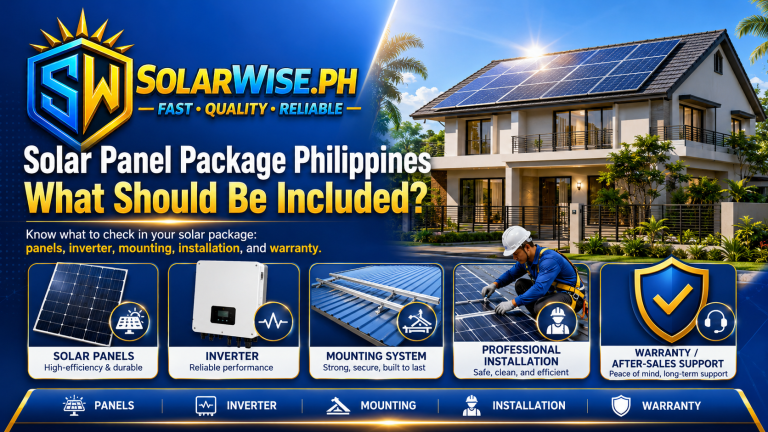
You should receive a detailed quotation that includes solar panels, inverter, mounting structure, wiring, breakers, labor, permits if applicable, monitoring setup, warranty, and net metering assistance.
Avoid choosing based on the cheapest price only. Quality installation matters because your solar system should last for many years.
5. Installation
Once approved, the installation team will mount the panels, install the inverter, connect the wiring, and integrate the system with your home’s electrical setup.
Most residential solar panel installations can be completed within a few days, depending on system size, roof access, and weather conditions.
6. Testing and Commissioning
After installation, the system will be tested for safety and performance. The installer should check inverter readings, panel output, breakers, monitoring app, grounding, and overall system operation.
7. Net Metering Application
For grid-tied solar systems, the installer may assist with the net metering application. This usually involves technical documents, system details, inspection, and coordination with the utility provider.
How Much Can You Save with Solar Panels in Quezon City?
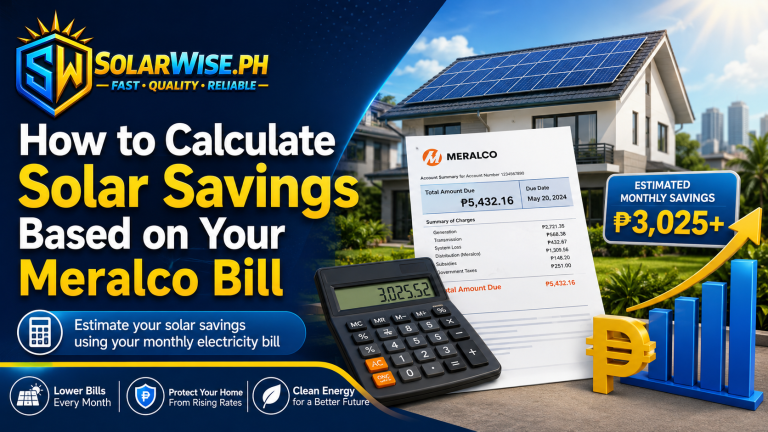
Your solar savings depend on several factors, including system size, roof orientation, daytime usage, shading, weather, electricity rate, and net metering approval.
A properly designed solar panel system can significantly reduce your monthly electricity bill, especially if you use appliances during the day.
For example, a household with a monthly bill of ₱8,000 to ₱12,000 may benefit from a 5 kW to 7 kW system. Homes with higher bills may need larger systems to offset more consumption.
However, solar does not always mean zero bill. You may still pay for nighttime usage, minimum charges, grid charges, and electricity consumed when solar production is low.
The realistic goal is to reduce your bill, improve energy independence, and recover your investment over time.
Factors That Affect Solar Panel Cost in Quezon City
Several factors can affect your final installation cost:
Roof Type and Condition
Concrete roofs, metal roofs, tile roofs, and steep roofs may require different mounting systems. If your roof needs repair or reinforcement, this may add to the cost.
System Size
The larger the solar system, the higher the total cost. However, larger systems may have a lower cost per watt compared to smaller systems.
Inverter Type
String inverters are common and cost-effective. Microinverters or hybrid inverters may cost more but can offer benefits for shaded roofs or battery-ready systems.
Battery Storage
Batteries increase the cost significantly but provide backup power during outages.
Shading
Trees, neighboring houses, buildings, antennas, and water tanks can reduce production. Shading may require a better layout, optimizers, or microinverters.
Installation Complexity
Difficult roof access, long wiring runs, multiple roof sections, or electrical upgrades can affect labor and materials.
Is Solar Worth It for Homeowners in Quezon City?
Yes, solar panel installation in Quezon City can be worth it, especially if your monthly electricity bill is consistently high and your roof gets good sunlight.
Solar is ideal for:
Homes with monthly bills above ₱5,000
Families using aircon during daytime
Work-from-home households
Homes with large refrigerators or pumps
Properties with wide, unshaded roof space
Homeowners planning to stay long-term
Small businesses operating from home
If your home has strong daytime electricity usage, solar can help you maximize savings faster.
Areas in Quezon City Served by Solar Installers
Solar panel installation is suitable for many residential and commercial areas in Quezon City, including:
Fairview
Novaliches
Batasan Hills
Commonwealth
Tandang Sora
Project 6
Project 7
Project 8
Cubao
New Manila
Loyola Heights
Katipunan
Diliman
Teacher’s Village
Balintawak
Sauyo
Bagbag
Payatas
Holy Spirit
Don Antonio
Matandang Balara
Eastwood nearby areas
Quezon Avenue
Timog
Tomas Morato
Including these local areas helps your blog rank better for location-based searches such as solar panel installation Fairview Quezon City, solar panels Novaliches, and solar installer near Commonwealth QC.
How to Choose the Best Solar Installer in Quezon City
Choosing the right solar installer is one of the most important decisions. Hindi sapat na mura lang ang quote. You need a provider that can design, install, and support your system properly.
Look for a solar installer that offers:
Free or proper site assessment
Clear solar system design
Realistic savings estimate
Quality solar panels
Reliable inverter brands
Safe wiring and protection devices
Workmanship warranty
Equipment warranty
After-sales support
Net metering assistance
Monitoring setup
Transparent quotation
A trustworthy installer should explain what is included in the package and what is not included.
Solar Panel Maintenance Tips for QC Homes
Solar panels are low-maintenance, but they still need basic care.
Clean the panels when there is heavy dust, bird droppings, or leaves. Check your inverter monitoring app regularly. Watch for new shading from growing trees or nearby construction. Schedule a system inspection after strong storms or typhoons.
A well-maintained solar system can perform better and last longer.
Frequently Asked Questions
How much is solar panel installation in Quezon City?
Solar panel installation in Quezon City may cost around ₱150,000 to ₱250,000 for a 3 kW system, ₱250,000 to ₱400,000 for a 5 kW system, and ₱450,000 to ₱700,000+ for a 10 kW system, depending on equipment, roof condition, and installation requirements.
What is the best solar system size for a Quezon City home?
For many QC homes, 3 kW to 5 kW is a good starting size. Homes with higher electricity bills, multiple aircons, or daytime appliance use may need 5 kW to 10 kW.
Can Quezon City homeowners apply for net metering?
Yes. Eligible Meralco customers with qualified renewable energy systems may apply for net metering. Meralco states that systems up to 100 kW can export excess renewable electricity and receive corresponding bill credits.
Do solar panels work during cloudy or rainy days?
Yes, solar panels still produce electricity during cloudy or rainy days, but output is lower compared to sunny days.
Do I need batteries for my solar system?
Not always. If your goal is to reduce your electric bill, grid-tied solar may be enough. If you want backup power during outages, choose a hybrid solar system with batteries.
How long does solar panel installation take?
Many residential installations can be completed within a few days, depending on system size, roof access, weather, and electrical requirements.
Conclusion
Solar panel installation in Quezon City is a smart investment for homeowners who want to reduce electricity bills and make their homes more energy-efficient. With the right system size, proper installation, and net metering, solar can provide long-term savings and better control over your energy costs.
Whether you live in Fairview, Novaliches, Commonwealth, Batasan Hills, Cubao, New Manila, Diliman, Katipunan, Tandang Sora, or other parts of QC, a professionally designed rooftop solar system can help you save more from your monthly electricity expenses.
Before installing, start with an electric bill assessment and site inspection. This ensures your solar system is properly sized, safely installed, and built for long-term performance.