
Best Solar Setup for Homes in Cavite, Metro Manila, and Rizal
Kung homeowner ka sa Pilipinas at pagod ka na sa mataas na monthly electric bill, one of the smartest long-term investments today is choosing the right solar setup for home Philippines. Whether you live in Cavite, Metro Manila, Rizal, or nearby areas, a properly designed solar power system can help reduce your electricity expenses and make your home more energy-efficient.
Pero hindi lahat ng solar setup ay pare-pareho. May grid-tied solar, hybrid solar with battery, off-grid solar, small starter systems, and larger systems for homes with multiple aircons or high daytime usage. Ang best solar setup for your home depends on your monthly Meralco bill, daytime electricity use, roof space, budget, and whether you need backup power during outages.
This guide will help you understand the best solar setup for homes in Cavite, Metro Manila, and Rizal, including system size, cost, setup type, installation process, and local solar savings tips.
What Is the Best Solar Setup for Home Philippines?
The best solar setup for home Philippines is usually a properly sized grid-tied solar system for homeowners whose main goal is to reduce their monthly electric bill. Grid-tied systems are connected to your home and the utility grid, allowing your house to use solar energy during the day and draw power from the grid when needed.
For homeowners who also want backup power during brownouts, the best option may be a hybrid solar system with battery storage. This setup is more expensive but can provide stored energy for essential loads such as lights, Wi-Fi, CCTV, refrigerator, fans, and selected outlets.
In simple terms:
Choose grid-tied solar if your main goal is lower monthly electricity bills.
Choose hybrid solar if you want both electricity savings and backup power.
Choose off-grid solar only if the property has no reliable grid connection or is in a remote area.
For most homes in Cavite, Metro Manila, and Rizal, grid-tied or hybrid solar is the most practical option.
Why Solar Is Ideal for Homes in Cavite, Metro Manila, and Rizal
Cavite, Metro Manila, and Rizal are high-demand residential areas with many subdivisions, townhouses, condo units, family homes, home offices, and small businesses. Many households in these areas use electricity heavily because of air-conditioning, refrigerators, washing machines, water pumps, computers, CCTV, Wi-Fi, kitchen appliances, and work-from-home equipment.
Because of this, homeowners are now searching for:
solar setup for home Philippines
solar panels for home Philippines
solar setup Cavite
solar setup Metro Manila
solar setup Rizal
residential solar installer near me
A good solar setup helps reduce daytime electricity consumption from the grid. Kapag may araw, your solar panels generate power that your home can use immediately. This can lower your electric bill and help protect your household from rising electricity costs.
Grid-Tied Solar Setup for Homes
A grid-tied solar setup is the most common residential solar system in urban and suburban areas. It includes solar panels, inverter, mounting structure, wiring, breakers, protection devices, and monitoring system.
During the day, the solar panels generate electricity. Your home uses solar power first. If your usage is higher than solar production, the remaining power comes from the grid. If your system produces more than your home uses and you are approved for net metering, the excess power may be exported to the grid as bill credits.
Best For:
Homes with high daytime electricity usage
Households with monthly bills above ₱5,000
Homeowners who want faster return on investment
Properties with good roof space and sunlight
Homes in Cavite, Metro Manila, and Rizal under grid service areas
Advantages:
Lower upfront cost than hybrid systems
Good monthly savings potential
Works well with net metering
No battery maintenance
Ideal for residential rooftops
Limitation:
A standard grid-tied system usually shuts down during power outages for safety reasons unless paired with backup equipment.
Hybrid Solar Setup with Battery
A hybrid solar setup includes solar panels, hybrid inverter, battery storage, protection devices, and backup load wiring. This system can store excess solar energy and provide backup power during outages.
Hybrid solar is becoming popular among homeowners who want more energy security, especially in areas that experience occasional brownouts or unstable power.
Best For:
Homes that need backup power
Households with important appliances
Work-from-home setups
Homes with CCTV, Wi-Fi, refrigerator, and selected outlets
Homeowners willing to invest more upfront
Advantages:
Can reduce electric bills
Can provide backup power
Can store solar energy
Good for essential loads during outages
Battery-ready for future energy independence
Limitation:
Higher cost compared to grid-tied solar because batteries and hybrid inverters are more expensive.
Off-Grid Solar Setup
An off-grid solar setup is designed for homes that are not connected to the utility grid. It usually includes solar panels, charge controller or hybrid inverter, battery bank, wiring, and backup generator if needed.
For most homes in Cavite, Metro Manila, and Rizal, off-grid solar is usually not the first choice because these areas already have grid access. However, it may be useful for farms, rest houses, remote properties, or areas with unreliable electricity.
Best For:
Remote homes
Farm houses
Rest houses
Properties without grid connection
Sites with very limited utility access
Limitation:
Higher battery cost
Requires careful load planning
Needs bigger storage for nighttime use
May require generator backup during rainy days
Recommended Solar Setup Based on Monthly Electric Bill
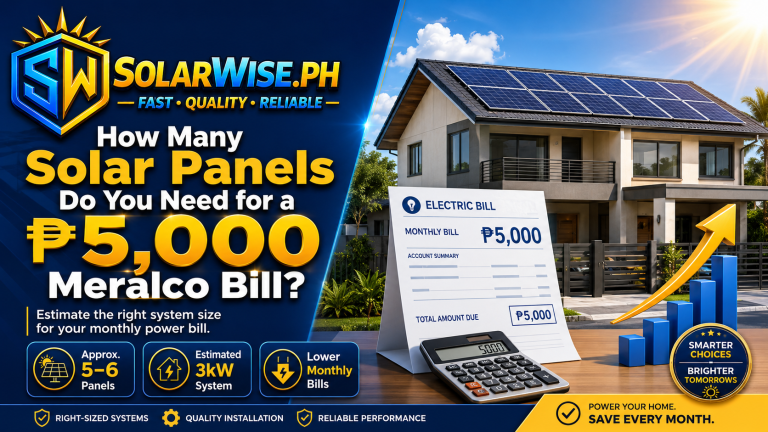
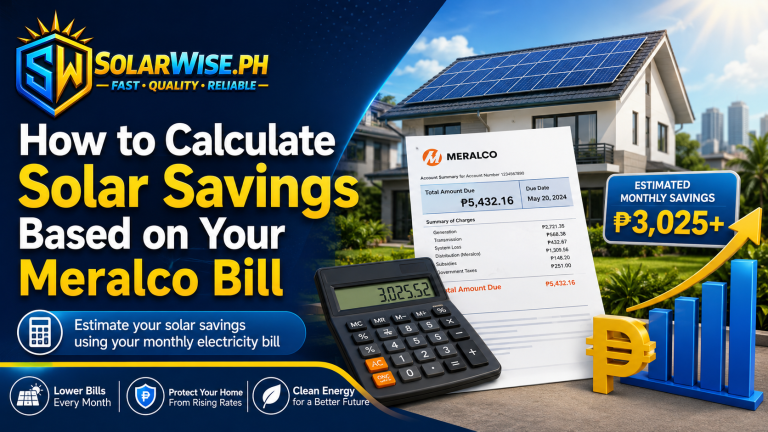
The best solar setup should be based on your actual monthly electricity usage. Hindi dapat hulaan ang system size. Dapat ito ay based sa Meralco bill, kWh consumption, daytime usage, and roof space.
| Monthly Electric Bill | Recommended Solar Size | Best Setup Type |
|---|---|---|
| ₱3,000 – ₱5,000 | 2 kW – 3 kW | Grid-tied starter setup |
| ₱5,000 – ₱8,000 | 3 kW – 5 kW | Grid-tied solar setup |
| ₱8,000 – ₱12,000 | 5 kW – 7 kW | Grid-tied or hybrid-ready |
| ₱12,000 – ₱18,000 | 7 kW – 10 kW | Grid-tied or hybrid |
| ₱18,000 and above | 10 kW and above | Custom solar setup |
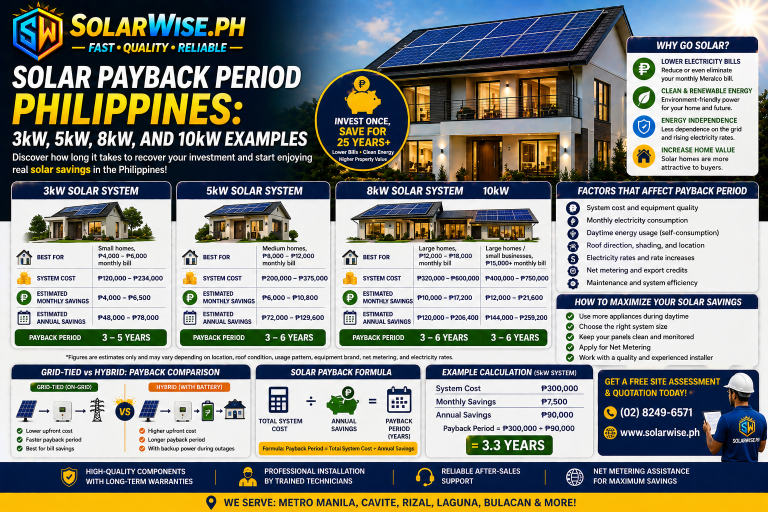
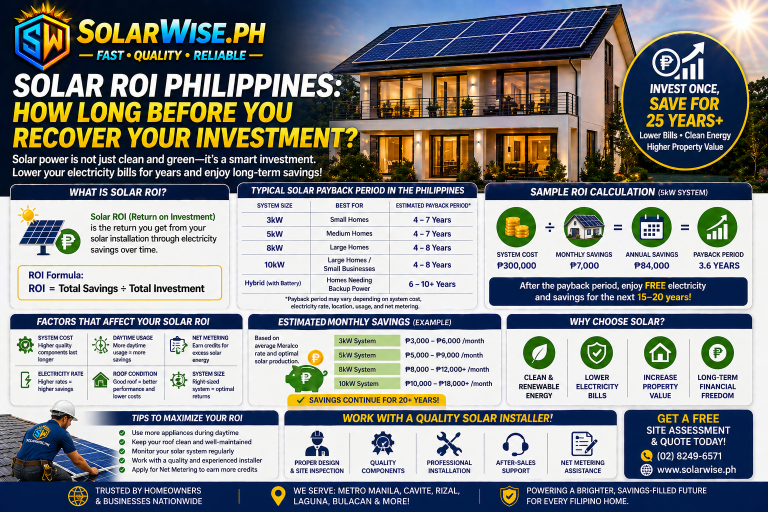
For most Filipino homes, a 3 kW to 5 kW grid-tied solar setup is a common starting point. For larger homes with multiple aircons, work-from-home equipment, water pumps, and higher daytime usage, a 5 kW to 10 kW solar setup may be more suitable.
Estimated Cost of Solar Setup for Home Philippines
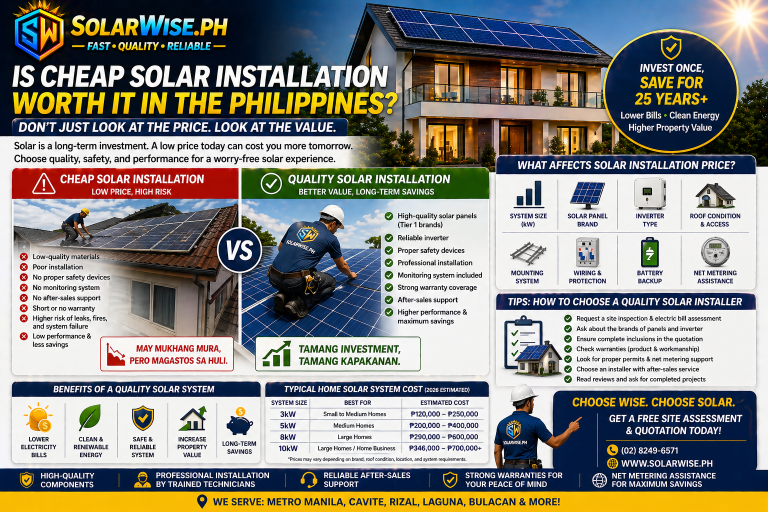
The cost of a solar setup for home Philippines depends on system size, inverter type, solar panel brand, roof type, wiring distance, installation complexity, and whether batteries are included.
Here is a practical estimated cost guide:
| Solar Setup Size | Best For | Estimated Cost Range |
|---|---|---|
| 2 kW Grid-Tied | Small homes, low usage | ₱100,000 – ₱160,000 |
| 3 kW Grid-Tied | Small to medium homes | ₱150,000 – ₱250,000 |
| 5 kW Grid-Tied | Medium homes with aircon use | ₱250,000 – ₱400,000 |
| 7 kW Grid-Tied | Larger homes, higher usage | ₱350,000 – ₱500,000 |
| 10 kW Grid-Tied | Large homes or home-based businesses | ₱450,000 – ₱700,000+ |
| Hybrid with Battery | Homes needing backup power | Higher depending on battery size |
These are estimated ranges only. The actual price depends on the equipment, installation requirements, roof condition, and battery capacity if included.
Best Solar Setup for Cavite Homes
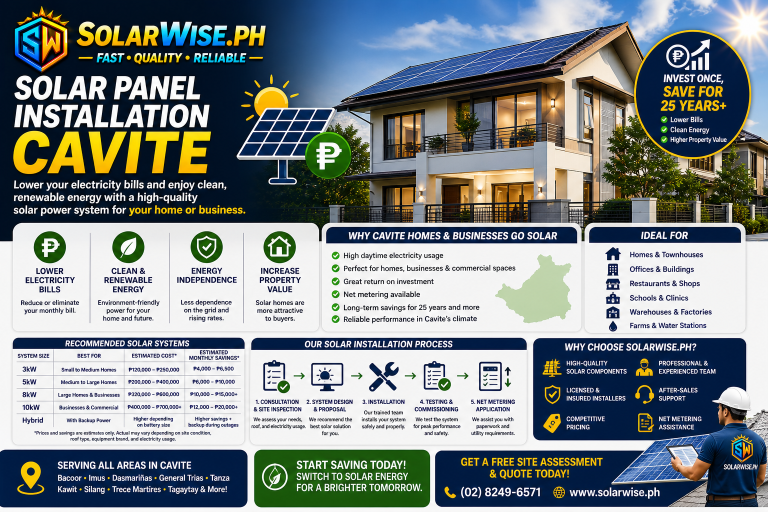
Cavite is one of the fastest-growing residential areas near Metro Manila. Many homes in Bacoor, Imus, Dasmariñas, General Trias, Tanza, Kawit, Silang, Trece Martires, and Tagaytay have high electricity usage because of aircon, water pumps, refrigerators, and work-from-home setups.
For many Cavite homes, the best solar setup is usually:
3 kW to 5 kW grid-tied solar for small to medium homes
5 kW to 8 kW grid-tied solar for homes with multiple aircons
Hybrid solar setup for homes needing backup power
Cavite homes with wide roof areas and strong daytime sun exposure can benefit from solar, especially if the household consumes electricity during the day.
Best Solar Setup for Metro Manila Homes
Metro Manila homes often have higher electricity usage because of dense urban living, air-conditioning, work-from-home setups, appliances, and limited ventilation. Areas such as Quezon City, Las Piñas, Muntinlupa, Parañaque, Makati, Taguig, Pasig, Mandaluyong, Manila, Caloocan, and Marikina can benefit from rooftop solar if the roof has enough space and sunlight.
For Metro Manila homes, the best solar setup is usually:
3 kW grid-tied solar for smaller homes
5 kW grid-tied solar for medium homes with aircon
7 kW to 10 kW solar for larger homes or high electric bills
Hybrid solar for homes that need backup power during outages
Because Metro Manila properties may have nearby buildings, trees, antennas, and water tanks, proper shade analysis and roof inspection are very important.
Best Solar Setup for Rizal Homes
Rizal homes in Antipolo, Cainta, Taytay, Angono, Binangonan, San Mateo, Rodriguez, Tanay, Morong, and Teresa can also benefit from residential solar panels.
For many Rizal homes, the best solar setup is usually:
3 kW to 5 kW grid-tied solar for typical residential households
5 kW to 7 kW solar setup for homes with higher daytime usage
Hybrid solar with batteries for properties needing backup power
Custom setup for hillside homes, resorts, farms, or home-based businesses
In areas like Antipolo, roof angle and shading should be checked carefully because some properties are located on slopes or near trees.
What Components Are Included in a Home Solar Setup?
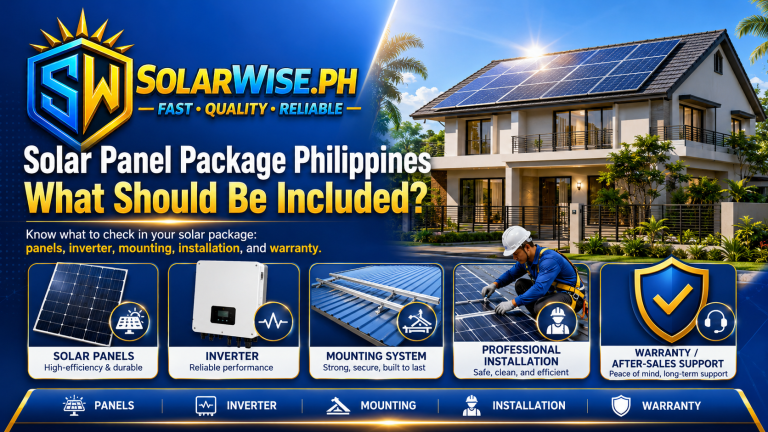
A typical residential solar setup includes:
Solar panels
Inverter
Mounting structure
DC and AC wiring
Breakers and protection devices
Grounding system
Monitoring system or app
Installation labor
Testing and commissioning
Optional net metering assistance
Optional batteries for hybrid systems
A good solar installer should explain each component clearly and provide a transparent quotation.
Step-by-Step Process for Home Solar Installation
1. Electric Bill Assessment
Your installer should review your recent electric bills to understand your monthly kWh usage and average billing pattern.
2. Site Inspection
The roof is inspected for space, direction, material, shading, structural condition, and wiring route.
3. System Design
The installer designs the solar setup based on your usage, roof layout, and budget. This includes the number of panels, inverter size, and estimated savings.
4. Quotation
You receive a detailed quote showing equipment, materials, labor, warranty, monitoring, and optional net metering support.
5. Installation
The team installs the mounting system, solar panels, inverter, wiring, breakers, and monitoring setup.
6. Testing and Commissioning
The installer tests the system to ensure safe operation and proper performance.
7. Net Metering Application
For grid-tied systems, your installer may help with the net metering application so excess solar energy can be credited to your bill.
How to Know the Right Solar Setup for Your Home
To choose the best solar setup for home Philippines, ask these questions:
How much is your monthly electric bill?
How many kWh do you consume per month?
Do you use electricity mostly during the day or night?
How many aircon units do you use?
Do you work from home?
Do you need backup power during brownouts?
How much roof space is available?
Is your roof shaded by trees or nearby buildings?
Are you planning to stay in the house long-term?
The more daytime electricity you use, the better your solar savings potential.
Is Solar Worth It for Homes in the Philippines?
Yes, solar can be worth it for many Filipino homeowners, especially if the monthly electric bill is consistently high and the roof has good sun exposure.
Solar is ideal for:
Homes with monthly bills above ₱5,000
Families using appliances during daytime
Work-from-home households
Homes with multiple aircon units
Properties with wide roof space
Homeowners planning to stay long-term
Home-based businesses
Households wanting clean renewable energy
Solar may not be ideal if your roof is heavily shaded, your electricity bill is very low, or you plan to move soon.
How to Choose the Best Solar Installer
Choosing the right installer is important because your solar setup should last for many years. Hindi sapat na mura lang ang price. Quality design and safe installation matter.
Look for a solar installer that offers:
Proper electric bill assessment
Actual site inspection
Clear solar design
Honest savings estimate
Quality solar panels
Reliable inverter options
Safe wiring and protection devices
Workmanship warranty
Equipment warranty
Monitoring setup
Net metering assistance
After-sales support
Transparent quotation
A trusted installer should explain what system is best for your home, not just sell the biggest package.
Frequently Asked Questions
What is the best solar setup for home Philippines?
For most homes, the best setup is a grid-tied solar system because it is cost-effective and helps reduce monthly electric bills. If you need backup power, a hybrid solar setup with batteries may be better.
How many solar panels do I need for my home?
It depends on your monthly electricity consumption and solar panel wattage. A 3 kW system may need around 5 to 7 panels depending on panel capacity, while a 5 kW system may need around 9 to 12 panels.
Is 3 kW solar enough for a home?
A 3 kW solar setup may be enough for small to medium homes with moderate electricity usage. Homes with multiple aircons or high daytime usage may need 5 kW or higher.
Is 5 kW solar enough for a Filipino home?
A 5 kW solar system is a common choice for medium homes with aircon use, work-from-home setups, and higher monthly electricity bills.
What is better, grid-tied or hybrid solar?
Grid-tied solar is better if your main goal is lower electric bills. Hybrid solar is better if you also want backup power during outages.
Do I need batteries for my home solar setup?
Not always. Batteries are optional. If you only want bill savings, grid-tied solar may be enough. If you want backup power, choose hybrid solar with batteries.
Can I use solar at night?
Solar panels only generate electricity during the day. At night, you use grid power unless your system has batteries.
Can I apply for net metering?
Yes, eligible grid-tied solar systems may apply for net metering through the utility provider. Your installer can help prepare the required documents.
Conclusion
The best solar setup for home Philippines depends on your monthly electric bill, daytime usage, roof space, budget, and need for backup power. For most homes in Cavite, Metro Manila, and Rizal, a grid-tied solar system is the most practical choice for lowering electricity bills. For homeowners who want backup power, a hybrid solar system with batteries may be the better option.
Whether you live in Cavite, Quezon City, Las Piñas, Muntinlupa, Parañaque, Alabang, Antipolo, Cainta, Taytay, or other nearby areas, a properly designed solar setup can help your home save more energy and reduce long-term electricity costs.
Before installing, start with an electric bill assessment and site inspection. This ensures your solar power system is properly sized, safely installed, and built for long-term savings.